Uber and Lyft make transportation convenient in Glastonbury. Whether people are traveling to Hartford, visiting local restaurants, or getting home safely after a night out, rideshare services provide flexibility that traditional taxis do not. However, convenience disappears when a rideshare vehicle is involved in an accident.
Unlike a standard car accident, a rideshare collision raises complicated legal questions: Which insurance policy applies? Who is legally responsible? How much compensation can the injured person recover?
At The Flood Law Firm, we answer these questions for people injured in rideshare accidents, including passengers, other drivers, pedestrians, and cyclists. Our attorneys use their experience and resources to pursue the compensation you deserve. If a rideshare accident injured you, contact us for a free consultation to understand your legal options.
Glastonbury Rideshare Accident Lawyer Key Takeaways
- Insurance coverage depends on the driver’s app status. Whether the driver was offline, waiting for a ride, or transporting a passenger determines which insurance policy applies and how much coverage is available.
- Rideshare accident claims are more complex than typical crashes. Liability may involve multiple parties, including the driver, other motorists, and Uber or Lyft’s insurance carriers.
- Insurers may dispute your coverage, app status, or fault to reduce payouts. A strong legal strategy is key to overcoming these tactics.
- Your actions after the accident matter because they can profoundly influence the progression and outcome of your case.
- Call a lawyer today to discuss your Glastonbury rideshare accident claim and protect your right to full and fair compensation.
Why Hire The Flood Law Firm’s Glastonbury Rideshare Accident Lawyers

Rideshare cases are not simple. Your lawyer should have a solid history of handling ridesharing accident cases, understanding the unique legal issues involved. Rideshare accidents in Glastonbury mostly involve the following:
- Multiple insurers: The driver’s personal auto insurer and Uber/Lyft’s corporate insurers may argue over responsibility.
- Company policies: Uber and Lyft have strict rules for how and when their insurance applies.
- Disputed liability: Fault is not always clear, and insurers may attempt to shift blame onto injured victims.
The Flood Law Firm has earned recognition throughout Connecticut for taking on some of the most challenging personal injury cases. Insurance companies know that we do not shy away from complicated liability disputes, and other lawyers regularly send us cases that require aggressive litigation or advanced legal strategies.
We built this reputation by successfully handling claims where responsibility is unclear, multiple parties are involved, or the injuries are catastrophic.
Our attorneys approach each case with the same level of preparation used in high-stakes trials. From the start, we collect every piece of available evidence, including app and trip data from Uber or Lyft. We also collaborate with accident reconstruction specialists, medical experts, and economists to establish both the cause of the crash and the impact of the injuries on the client’s future. By building the case in this detailed manner, we are ready to present it to a jury if necessary.
This thorough preparation often persuades insurance companies to offer fair settlements, as they see we are ready to present a compelling case in court. As a result, many cases resolve for higher amounts without ever going to trial.
When you hire The Flood Law Firm, you are not just getting a lawyer to handle paperwork. You are choosing a team that knows how to untangle complex liability issues, push back against corporate insurers, and fight for the maximum compensation the law allows.
What Compensation Covers in a Rideshare Accident
If an Uber or Lyft crash injures you, the law allows you to seek compensation for all losses caused by the collision. These losses are divided into two main categories: economic damages and non-economic damages. In tragic cases where someone is killed, family members may also pursue wrongful death damages.
Economic damages are the financial costs that can be proven with supporting records such as bills, receipts, and employment records. They may include:
- Emergency care and hospitalization: Ambulance rides, ER visits, surgeries, and hospital stays can create immediate and overwhelming expenses.
- Ongoing medical treatment: Costs for physical therapy, follow-up visits, prescription medications, and medical devices like crutches or braces.
- Future care needs: Some injuries, such as spinal cord injury, may require years of specialized care or even lifelong medical support.
- Lost income: If your injuries keep you from working, you can claim the income you missed. In severe cases, you may also pursue compensation for a diminished ability to earn money in the future.
- Property damage: Repair and replacement of items damaged at the time of the crash.
On the other hand, non-economic damages are meant to address losses that don’t come with receipts but still affect your quality of life. These can be just as significant as the financial costs. They may include:
- Physical pain and suffering
- Emotional distress caused by the crash.
- Loss of enjoyment of life.
- Impact on relationships
Wrongful death damages may be available if the accident results in a fatality. In Connecticut, eligible family members may recover for:
- Funeral and burial expenses.
- The lost financial support the victim would have provided.
- The emotional and personal loss of a loved one’s companionship, guidance, and care.
At The Flood Law Firm, we carefully document each type of damage so your compensation reflects both the immediate and ongoing impact of the accident. We rely on every available source, such as employment records, to ensure nothing is overlooked.
Insurance Issues in Rideshare Accidents
One of the most complicated aspects of an Uber or Lyft accident is determining which insurance policy should cover the claim. Unlike a typical car crash, where you file a claim against the other driver’s auto policy, rideshare accidents involve multiple layers of coverage. The insurance that applies is dependent on whether the driver was actively using the rideshare app and what stage of the trip they were in. Consult an attorney to learn your rights and options for recovery.
Coverage periods in rideshare accidents are determined by the status of the driver app, which entails the following:
- App off: If the driver app was not on, the accident is treated like any other crash. Only the driver’s personal auto insurance applies.
- App on, waiting for a request: When a driver is available but has not yet accepted a ride, Uber and Lyft provide limited coverage, usually up to $50,000 per person for harm, $100,000 per incident, and $25,000 for damaged property. The driver’s personal insurance may also come into play.
- Ride accepted or passenger in the car: From the moment a driver accepts a trip until the passenger exits the vehicle, ridesharing companies must provide at least $1 million in liability coverage, as required by Connecticut law. This policy also includes at least $1 million in uninsured/underinsured motorist coverage.
Insurers frequently try to reduce payouts by disputing the driver’s status on the app. For example, they may claim the driver was not “actively engaged” in a trip, lowering the coverage available. They may also delay claims by shifting responsibility between the driver’s personal insurance and the rideshare company’s policy.
These coverage rules may seem straightforward, but insurers often use them to deny or undervalue valid claims. Without legal help, you may be left facing high medical bills while the companies argue over who should pay. At The Flood Law Firm, your Glastonbury rideshare accident attorney can obtain every relevant data to establish the driver’s status at the exact moment of the crash. This evidence helps ensure that the correct policy applies and that you can access the maximum benefits to cover your losses.
Where Do Rideshare Accidents Happen in Glastonbury?
Glastonbury’s mix of suburban neighborhoods, commercial centers, and commuter routes makes it a frequent location for rideshare use. Many people rely on Uber and Lyft for trips to Hartford, runs along Route 2, or late-night rides home from restaurants and events in town. While convenient, these conditions also create risks that increase the likelihood of accidents.
High-risk areas in Glastonbury include:
- Route 2 and major intersections: Heavy traffic along Route 2 and connecting roads like Hebron Avenue and Main Street often leads to congestion and sudden lane changes. When rideshare drivers are rushing to pick up or drop off passengers, these areas become accident hotspots.
- Town center and commercial areas: Parking lots and shopping centers, especially along New London Turnpike, see frequent rideshare activity. Collisions here may involve distracted drivers stopping suddenly to accept a fare.
- School and residential zones: Morning and afternoon traffic around schools creates crowded conditions where rideshare vehicles mix with buses, pedestrians, and cyclists.
Auto accidents in Glastonbury are shaped by these traffic patterns. A lawyer familiar with the town’s roads and intersections can better understand how the crash happened and anticipate the arguments insurers might raise. For example, knowing that a particular intersection has poor visibility or a history of collisions can strengthen your claim by showing how foreseeable the danger was.
At The Flood Law Firm, our Glastonbury rideshare accident attorneys combine local knowledge with legal strategy. This allows us to build stronger cases, backed not only by accident reports but also by an understanding of the real-world conditions that contributed to your crash.
What to Do After a Rideshare Accident in Glastonbury
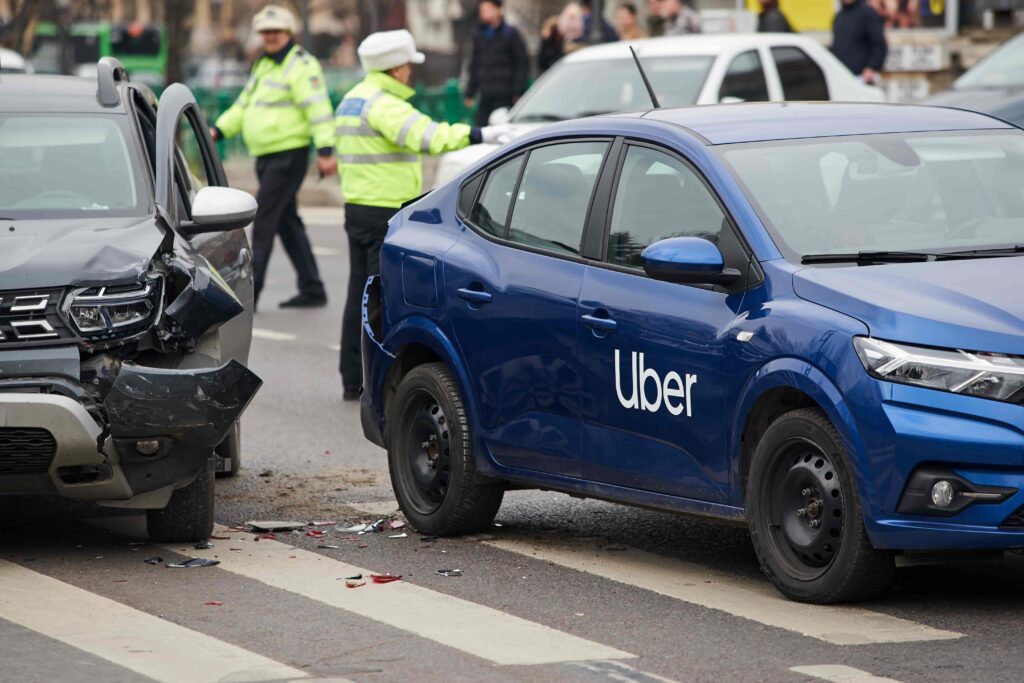
In the days or weeks after your rideshare accident, there are key steps you should take to safeguard your legal rights and strengthen your legal position. Insurance companies look for gaps and inconsistencies in your story to reduce what they owe you. By staying organized and proactive, you can give your claim the strongest chance of success.
- Follow your doctor’s treatment plan: Attend all follow-up appointments, take prescribed medications, and complete recommended therapy. Insurers will argue that skipping treatment means your injuries aren’t serious. A consistent medical record shows your car accident injuries are real and ongoing.
- Keep receipts and records: Save everything connected to the accident—medical bills, pharmacy receipts, transportation costs to appointments, and even repairs to personal property. These records provide hard proof of your financial losses.
- Write in a recovery journal: Document how the accident affects your daily life. Record your pain levels, sleep issues, mobility struggles, and the emotional challenges you face. This diary can make a powerful difference when proving non-economic damages like pain and suffering.
- Preserve evidence: Hold onto your damaged clothing, phone, or belongings from the crash. Do not repair or replace them until your attorney advises you to—they may be important evidence.
When coming to our firm, remember to bring as much information as possible about your accident. The more detail your lawyer has, the stronger your case will be. At The Flood Law Firm, we use this documentation to build a full picture of your damages and ensure nothing is left out of settlement negotiations or trial.
FAQs About Rideshare Accidents in Glastonbury
Can I sue Uber or Lyft directly after a crash?
In most cases, you cannot sue Uber or Lyft directly. They categorize drivers as independent contractors, not employees, which limits direct company liability. However, you can pursue compensation through the $1 million insurance policy Uber and Lyft provide when a driver is logged into the app and transporting passengers. A lawyer can determine whether this coverage applies to your situation.
What if I were a passenger in an Uber or Lyft at the time of the accident?
As a passenger, you are not considered at fault in most accidents. You may be entitled to compensation from the rideshare company’s insurance, the other driver’s insurance, or both. Your attorney will review the facts and file claims against those responsible to maximize your recovery.
Does insurance cover a pedestrian or cyclist hit by a Rideshare vehicle?
If the Uber or Lyft driver was on duty at the time, their insurance coverage applies to your injuries. If they were logged out of the app, the driver’s personal auto insurance will be responsible. Establishing the driver’s app status is key, and an attorney can obtain evidence to prove it.
What if the at-fault driver was in another vehicle, not the Uber or Lyft?
If you were a passenger in a rideshare vehicle and another driver caused the crash, you can file a claim against that driver's insurance policy. If that driver is uninsured or their coverage is insufficient to pay for your injuries, the rideshare company's $1 million uninsured/underinsured motorist (UM/UIM) policy should apply to your claim.
What is the most important evidence to collect after a rideshare accident?
Key evidence includes screenshots of your ride details from the Uber or Lyft app, photos and videos of the accident scene and vehicle damage, the official police report, and contact information for any witnesses.
Your attorney can use this information, along with data requested directly from the rideshare company, to build your case.
Can I still file a claim if I was partially at fault for the accident?
Yes. Connecticut follows a modified comparative fault rule. This means you can still recover damages as long as you were not more than 50% responsible for the accident. However, your compensation award will decrease by your percentage of fault.
What if a rideshare driver hits me while their app is off?
If the rideshare driver's app was off when the accident occurred, Uber or Lyft's corporate insurance policies do not apply.
In this situation, the law treats this like any other car accident. You would file a claim against the driver's personal auto insurance policy to seek compensation for your injuries and other losses.
Call Our Glastonbury Rideshare Accident Lawyers Today
After a serious Uber or Lyft accident, the sooner you engage an attorney, the better chance you have to compile evidence and build an airtight claim. At The Flood Law Firm, we prepare every case as if it will go before a jury. This preparation gives us leverage in settlement talks and ensures you are positioned for the strongest outcome possible. If you suffered an injury in a rideshare crash in Glastonbury, contact us immediately to review the facts and explain your options.