
A valid slip and fall claim requires more than proof that a fall occurred. The evidence must connect the dangerous condition to a responsible party who created it or had legally sufficient notice.
A Bridgeport slip and fall lawyer at The Flood Law Firm helps injured people build that connection through inspection records, surveillance footage, and the documentation Connecticut premises liability law demands.
We handle premises liability claims in Bridgeport from our office at 1087 Broad Street. Our attorneys track down the records that show who controlled the property, what they knew, and when they knew it.
If you were injured in a fall on someone else's property in Bridgeport, call (475) 273-4100 for a free consultation.
- What Must a Slip and Fall Claim Actually Prove?
- How Does Bridgeport Snow and Ice Law Affect a Fall Claim?
- What About Falls on a Public Sidewalk in Bridgeport?
- What Evidence Shows a Property Owner Had Notice?
- Why Choose The Flood Law Firm for a Bridgeport Slip and Fall Case?
- How Does the Injury Affect What a Bridgeport Fall Claim Is Worth?
- What If the Property Owner Says You Share the Blame?
- What Is the Deadline to File a Slip and Fall Claim in Bridgeport?
- FAQs for Bridgeport Slip and Fall Claims
- Taking the First Step After a Bridgeport Fall
What Must a Slip and Fall Claim Actually Prove?
A dangerous condition on someone else's property does not automatically create a valid claim. Connecticut premises liability law generally requires proof that the responsible party either created the hazard or had notice of it before the fall. That notice requirement is where many of these disputes center.
A wet floor, broken step, or patch of ice matters legally only when the evidence connects it to someone who had both knowledge and control of the issue. An insurer may argue that no one knew about the condition, that it appeared shortly before the fall, or that the injured person shares fault.
What Is the Difference Between Actual Notice and Constructive Notice?

Actual notice means the responsible party already knew about the condition. An employee who saw a spill, a tenant who reported a broken stair, or a maintenance request identifying a recurring leak may all support proof of actual notice. The practical question is what records exist showing someone already knew.
Constructive notice focuses on whether the specific hazard was apparent and existed long enough for reasonable inspection to discover it. A spill that appeared seconds before a customer turned the corner raises a very different question than a leaking freezer that left water in the same aisle every afternoon.
Connecticut courts treat the length of time a defect existed before the fall as an important factor in constructive notice analysis. That timeline is why surveillance footage, inspection logs, and maintenance records matter so much in these cases.
Who Controlled the Area Where the Fall Happened?
Liability does not always follow the name on the property deed. The relevant question is who possessed, maintained, inspected, or agreed to service the specific area where the fall occurred.
That distinction comes up constantly in Bridgeport. A landlord may control apartment building stairways while a tenant controls the unit's interior. A store may lease its space while the building owner maintains the parking lot. A snow removal contractor may handle sidewalks under a separate service agreement.
Each arrangement shifts who bears responsibility. Our attorneys review lease provisions, management agreements, maintenance contracts, and work orders to identify every party that controlled the area and owed a duty of care.
Does Your Reason for Being on the Property Matter?
Connecticut law may tie a property possessor's duty to the visitor's legal status. Business invitees and social invitees receive the same standard of care under Connecticut General Statutes § 52-557a, while different rules apply to licensees and trespassers.
For customers and other invitees, the duty includes reasonable inspection for hazards that ordinary care would uncover. The exact duty still depends on the visitor's status and the circumstances of the property.
How Does Bridgeport Snow and Ice Law Affect a Fall Claim?
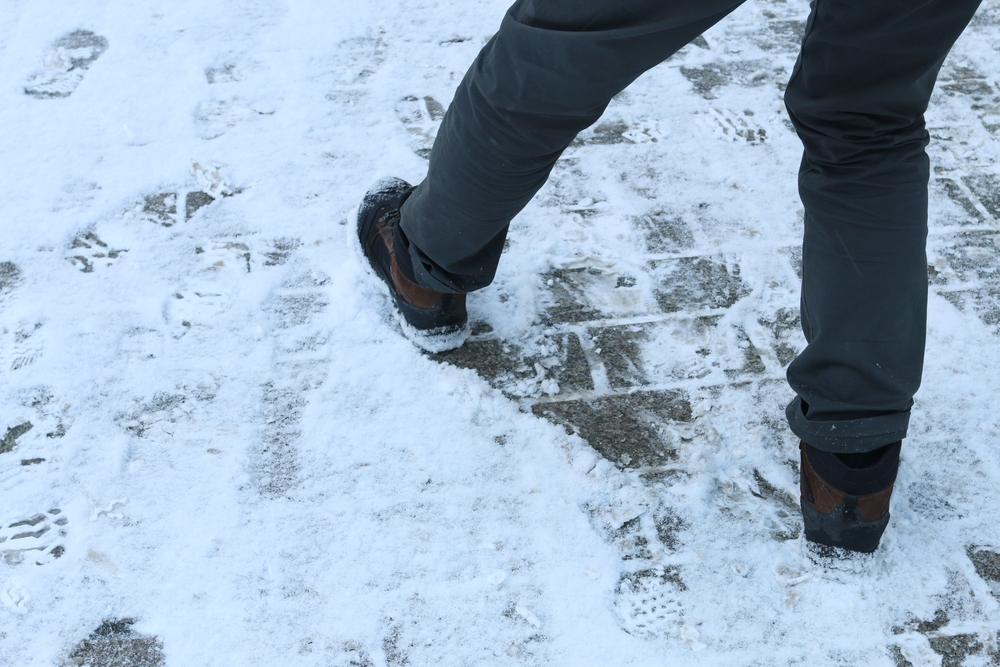
Winter falls raise different legal questions than a spill inside a store. Bridgeport has adopted specific rules governing snow and ice on public sidewalks through Municipal Code § 12.16.160, which follows Connecticut General Statutes § 7-163a. The city requires property owners to address snow and ice on sidewalks fronting their buildings.
Who bears responsibility depends on the location and circumstances. A fall on ice outside a commercial entrance may involve the business, its landlord, or a snow removal contractor. A fall on an abutting public sidewalk may involve the adjacent property owner under Bridgeport's municipal code.
What If the Storm Was Still in Progress?
Connecticut recognizes an ongoing-storm doctrine. A property owner generally may wait until a storm ends, and for a reasonable time afterward, before clearing the accumulation. A fall during an active storm raises a different liability analysis than a fall on ice that formed hours or days earlier.
The timing of the precipitation and the timing of the fall both matter. Weather records, contractor logs, and surveillance footage help establish whether the storm had ended and whether the property owner had a reasonable opportunity to clear the area.
What About Falls on a Public Sidewalk in Bridgeport?
Falls on public sidewalks involve rules that differ from falls on private property. Connecticut's defective-highway statute, § 13a-149, creates special requirements for certain claims involving defective roads and sidewalks maintained by municipalities. Those requirements generally include written notice to the municipality within 90 days of the injury.
A premises liability lawyer in Bridgeport needs to identify early whether the fall involves a municipal sidewalk claim, because the procedural requirements are different and time-sensitive.
Does It Matter Whether the Defect Was Snow or a Structural Problem?
The type of sidewalk defect changes the legal analysis. A fall caused by snow or ice on a public sidewalk may follow the liability framework under § 7-163a and Bridgeport's municipal code. A fall caused by a broken, cracked, or uneven municipal sidewalk may instead fall under § 13a-149's defective-highway provisions.
The distinction affects who bears responsibility, what notice is required, and which deadlines apply. Treating every sidewalk fall the same way risks applying the wrong liability rule or deadline.
What Evidence Shows a Property Owner Had Notice?
The strongest slip and fall evidence reconstructs what happened before the fall, not just the fall itself. The goal is to establish when the dangerous condition first appeared, who had a chance to discover it, and what they did or failed to do.
Several types of records help build that notice timeline:
- Surveillance footage from the property may show when a spill first appeared and whether employees walked past it before the fall.
- Inspection logs and sweep sheets document when staff last checked the area and whether they followed a scheduled routine.
- Maintenance requests and work orders may establish earlier knowledge of a recurring leak, broken fixture, or structural defect.
- Service contracts and snow removal agreements identify which company or individual controlled repairs, cleaning, or winter maintenance in the area.
- Incident reports and prior complaints may show that the same condition had caused concern or injury before.
Each of these records may disappear if not requested promptly. Preservation letters and formal discovery requests are part of how we protect the evidence that a Bridgeport slip and fall case depends on.
The location of the fall also changes both the potential defendant and the type of notice evidence needed. Different situations create different control questions.
| Fall Situation | Key Liability Question | Evidence That May Matter |
|---|---|---|
| Liquid on a store floor. | Did the business create the spill or have enough time to discover it? | Surveillance, inspection logs, employee testimony, and incident reports. |
| Broken stair or handrail. | Who controlled the area, and how long had the defect existed? | Repair requests, maintenance records, photographs, and prior complaints. |
| Ice outside a business. | Who handled snow removal, and had the storm ended? | Weather records, service contracts, removal logs, and surveillance. |
| Apartment common-area fall. | Did the landlord, manager, tenant, or contractor control the area? | Lease provisions, management agreements, work orders, and maintenance records. |
| Public sidewalk fall. | Was the problem snow and ice, or a structural defect governed by different rules? | Municipal records, ordinance provisions, photographs, and notice documents. |

Why Choose The Flood Law Firm for a Bridgeport Slip and Fall Case?
The records needed to prove notice may be held by the property owner, manager, or maintenance contractor. The Flood Law Firm focuses on identifying those records and connecting them to the notice and control questions that determine liability.
Our attorneys review surveillance footage, obtain inspection and maintenance records, identify every party that controlled the area, examine service contracts, organize medical documentation, and prepare disputed notice and control issues for litigation. We prepare these cases for disputes over what the property owner knew and when.
Other attorneys refer personal injury matters to The Flood Law Firm when a case requires Connecticut litigation preparation or trial support. Our work as Bridgeport personal injury attorneys includes premises liability and other serious injury matters, including Bridgeport car accident claims.
Call (475) 273-4100 for a free consultation with a slip and fall attorney in Bridgeport, CT.
How Does the Injury Affect What a Bridgeport Fall Claim Is Worth?
The phrase "slip and fall" does not describe the severity of the resulting injury. A fall onto a hard surface, down stairs, or onto ice may cause fractures, head injuries, spinal damage, or torn ligaments requiring substantial treatment.
Serious falls in Bridgeport may begin with emergency care at Bridgeport Hospital, a state-designated regional trauma center.
Why Does the Mechanism of the Fall Matter More Than the Label?
A fall injury lawyer in Bridgeport evaluates the claim based on what the fall actually did, not the category of accident. The injury's effect on work, independence, and daily functioning helps shape the claim's value.
Common examples show how widely that impact varies:
- A wrist or shoulder fracture may keep a manual laborer out of work for months and require surgical repair and physical therapy.
- A hip injury that requires surgery may involve extended rehabilitation, mobility assistance, and household help that outlasts the initial recovery.
- A head impact from a fall onto concrete may produce cognitive symptoms that affect concentration, memory, and work performance.
- A knee injury that affects the ability to stand, climb stairs, or perform job duties may result in long-term occupational restrictions.
- A spinal injury from a stairway fall may require ongoing treatment, pain management, and modifications to daily activity.
Medical records, employment documentation, and functional evaluations connect the fall to these specific, measurable losses.
What If the Property Owner Says You Share the Blame?

A property owner or insurer may argue that the injured person missed a warning, failed to see the hazard, or chose an unsafe route. Connecticut law allows that argument to reduce the claim's value, but it does not necessarily end it.
Connecticut General Statutes § 52-572h applies a modified comparative negligence standard. The injured person may recover as long as their negligence does not exceed the combined negligence of those from whom recovery is sought. A fault allocation reduces the recovery by the injured person's assigned percentage.
A store may point to a yellow warning cone. But the real dispute often involves where the cone stood relative to the hazard, whether it actually identified the danger, and whether the route remained reasonably passable. A warning sign does not resolve the fault question by itself.
What Is the Deadline to File a Slip and Fall Claim in Bridgeport?
Connecticut General Statutes § 52-584 generally requires a negligence-based injury action within two years from the date the injury was first sustained, discovered, or reasonably ought to have been discovered. The statute also imposes a three-year outer limit from the act or omission.
Falls involving qualifying public sidewalks or roadways may carry separate and shorter notice requirements under § 13a-149, generally including written notice to the municipality within 90 days. Missing that earlier deadline may affect the claim even when the general statute of limitations has not yet run.
Evidence may also disappear well before the lawsuit deadline. Surveillance systems may overwrite footage, and businesses may replace or discard inspection records. Early legal review leaves more time to identify and request those materials.
FAQs for Bridgeport Slip and Fall Claims
Do I Need a Lawyer After a Slip and Fall in Bridgeport?
Connecticut law does not require a lawyer after a fall on someone else's property, but representation may be useful when the property owner disputes notice, argues shared fault, or when the injuries involve surgery, extended treatment, or time away from work.
What If Nobody Saw Me Fall?
A claim does not require an eyewitness to the fall itself. Surveillance footage, the condition of the area, medical records documenting injuries consistent with a fall, and incident reports filed afterward may all help establish what happened.
What If the Fall Happened at Work on Someone Else's Property?
An employee injured on a third party's property may have both a workers' compensation claim through the employer and a separate premises liability claim against the property owner. These two claims follow different rules, and both may apply to the same fall.
Does Waiting to Report a Fall Prevent a Claim?
No. A delayed report does not automatically bar a claim. Waiting may make it harder to preserve evidence or connect the injury to the fall, but the claim itself may remain viable. Medical records showing treatment soon after the fall help bridge any gap in reporting.
Taking the First Step After a Bridgeport Fall

A slip and fall claim starts with understanding who controlled the property, what they knew, and what records exist to prove it. Those questions are worth answering before an insurer defines the claim on its own terms.
The Flood Law Firm offers free consultations and handles qualifying cases on a contingency-fee basis. Call (475) 273-4100 or contact us online to discuss your Bridgeport slip and fall claim.
The Flood Law Firm - Bridgeport Office
1087 Broad Street
Bridgeport, CT 06604
P: (475) 273-4100