A Connecticut traumatic brain injury lawyer at The Flood Law Firm helps injured people and their families pursue fair compensation. Our attorneys document how a TBI affects work, cognition, and daily life. These claims often require medical evidence, cognitive testing, and future-care documentation.
Founded by brothers Brian and Christopher Flood, the firm has offices in Middletown, Danbury, Waterbury, and Bridgeport. Other attorneys refer challenging personal injury matters to us, including cases that require extensive preparation or trial support.
If you or a family member is dealing with the effects of a brain injury, a free consultation is a good starting point. Call (877) 987-9529 to speak with a head injury lawyer in Connecticut.
- Why Choose The Flood Law Firm for a Brain Injury Case?
- What Makes a TBI Claim Different From Other Injury Cases?
- How Does a Brain Injury Affect What a Claim Is Worth?
- What Evidence Helps Prove a Connecticut Brain Injury Claim?
- How Does Connecticut Law Affect a TBI Lawsuit?
- Where Do Connecticut Residents Receive TBI Treatment and Rehabilitation?
- FAQs for Connecticut Traumatic Brain Injury Claims
- When You Need More Than a Standard Injury Claim
Why Choose The Flood Law Firm for a Brain Injury Case?
The Flood Law Firm focuses entirely on representing people who have been injured through negligence. Brian and Christopher Flood built the practice around high-stakes personal injury work. Christopher Flood's litigation background includes taking disputed cases through trial when negotiation does not produce a fair result.

TBI cases involve evidence that most injury claims do not. Our attorneys review neurological records, coordinate with treating physicians, organize cognitive and rehabilitation documentation, and calculate losses that may extend years into the future.
We also prepare for the disputes that arise when an insurer challenges the severity of a brain injury or questions whether ongoing symptoms relate to the accident.
Other lawyers across Connecticut trust The Flood Law Firm with referrals of difficult personal injury cases. That reputation reflects the firm's case preparation and our willingness to litigate when necessary. Call (877) 987-9529 for a free consultation with a brain injury attorney in CT.
What Makes a TBI Claim Different From Other Injury Cases?

A traumatic brain injury claim involves losses that are often invisible to anyone reviewing a chart from the emergency room. The injured person may look physically recovered while struggling with memory gaps, concentration problems, personality changes, or the inability to sustain a full workday.
That disconnect between outward appearance and actual functioning often becomes a central dispute in a TBI lawsuit in Connecticut. An insurer may rely on the initial diagnosis label or the absence of abnormal imaging to argue that the person has recovered.
A severe TBI may result in catastrophic and life-altering injuries that change every aspect of a person's daily functioning, and building the case requires documentation that goes deeper than the hospital visit.
Does a Normal CT Scan or MRI Mean There Is No Brain Injury?
A normal CT scan or MRI does not rule out a traumatic brain injury. A concussion is commonly associated with normal structural neuroimaging findings. The scan detects bleeding or fractures, but a concussion involves functional changes that conventional imaging may not capture.
This matters in a claim because an insurer may treat a normal scan as evidence that the injury is minor or resolved. Clinical evaluations, detailed symptom documentation, neuropsychological testing, and treatment records showing changed functioning after the accident help fill that evidentiary gap.
What About Symptoms That Last Months After a Concussion?
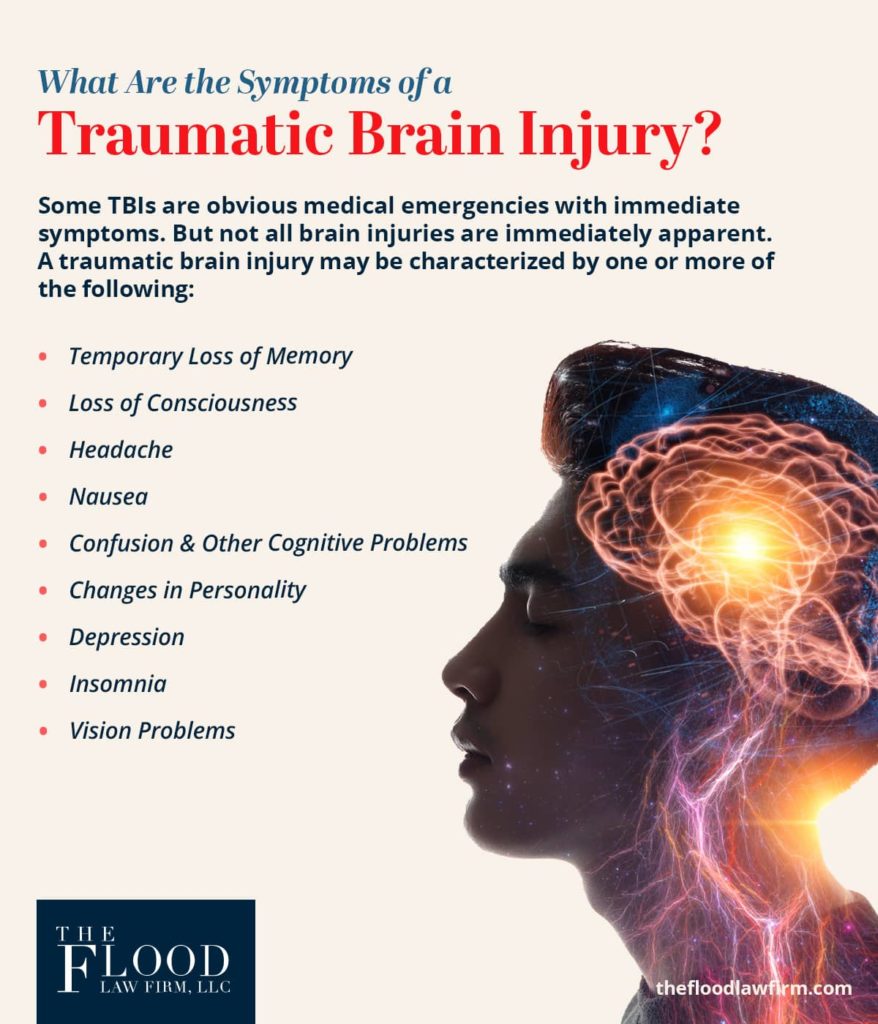
Some concussion symptoms resolve within weeks. For others, headaches, concentration difficulties, memory problems, sleep disruption, dizziness, and sensory sensitivity continue for months or longer. The CDC identifies this pattern as post-concussive syndrome.
When persistent symptoms interfere with work, household tasks, or daily responsibilities, they become part of the injury claim. Follow-up medical records, therapy notes, work restriction documentation, and sometimes a formal neuropsychological evaluation help capture the duration and severity of those symptoms.
What Is Diffuse Axonal Injury?
A diffuse axonal injury involves widespread damage to the brain's white matter from rotational forces or sudden deceleration. NINDS describes this injury as one that stretches or tears nerve fibers throughout the brain rather than causing damage in a single location.
The legal relevance is the breadth of impairment that may result. A diffuse axonal injury may affect cognition, motor control, sensory processing, and behavior. The rehabilitation timeline is often uncertain, and documenting these losses requires neurological assessments, rehabilitation records, and evidence of how the injury limits the person's functioning over time.
How Does a Brain Injury Affect What a Claim Is Worth?
The injury's documented effect on work, independence, and daily life determines the value of a traumatic brain injury claim. The question of what a brain injury claim may be worth goes beyond the emergency room bill. A TBI claim requires documenting losses that may continue for years.
A mild TBI with persistent symptoms creates different losses than a severe brain injury requiring inpatient rehabilitation. The diagnosis label alone does not determine the claim's value.
What Losses Go Beyond Medical Bills?
Medical treatment costs are only one part of a brain injury claim. The losses that often carry the most weight involve how the injury changes the person's ability to function in real, measurable ways.
A brain injury claim may include compensation for several categories of loss:
- A claim may include lost income from missed work during treatment and recovery, including losses from reduced hours or modified duties.
- Diminished earning capacity may apply when cognitive limitations prevent a return to the same occupation or level of responsibility.
- Future medical expenses may cover neurological follow-ups, cognitive rehabilitation, occupational therapy, speech therapy, and ongoing monitoring.
- Life-care planning costs document anticipated long-term needs such as household assistance, personal care support, and rehabilitation services.
- Compensation for pain and suffering, loss of function, and reduced daily independence may also form part of the claim.
Each of these categories requires specific documentation. A life-care plan, for example, is a detailed assessment of the support and treatment a person is likely to need going forward. It translates medical opinions into a financial framework that gives a claim its foundation for long-term losses.
Different brain injuries create different functional problems. Those differences affect which records matter most when documenting a claim.
| TBI Category | How It May Affect Daily Life | Records That May Document the Loss |
|---|---|---|
| Concussion or mild TBI | Concentration, headaches, memory, sleep, sensory sensitivity. | Medical notes, symptom history, work restrictions, neuropsychological records. |
| Diffuse axonal injury | Cognitive, motor, sensory, or behavioral impairment. | Neurological assessments, imaging where applicable, rehabilitation records. |
| Persistent post-concussive symptoms | Ongoing difficulty working or completing normal activities. | Follow-up treatment, therapy records, functional evaluations, employment records. |
| Moderate or severe TBI | Reduced independence and potentially extensive rehabilitation needs. | Hospital records, rehabilitation records, future-care assessments, employment evidence. |
What Evidence Helps Prove a Connecticut Brain Injury Claim?
A strong Connecticut brain injury claim connects the accident, the medical diagnosis, and the resulting functional losses with clear documentation. The challenge in many TBI cases is that the most significant effects do not appear on a standard X-ray or blood test. Cognitive changes, memory problems, and reduced work capacity require other forms of proof.
Several categories of evidence help close that gap:
- Neuropsychological testing may measure memory, attention, processing speed, and executive function against the person's pre-injury baseline.
- Treatment records from neurologists and rehabilitation therapists document the course of recovery and any ongoing limitations.
- Employment records may show changes in job performance, reduced hours, workplace accommodations, or inability to return to the same role.
- Statements from family members, coworkers, or treating providers describe observed changes in behavior, personality, or daily functioning.
- A life-care plan prepared by a qualified professional projects future treatment, support, and rehabilitation needs with associated costs.
Clear organization connects this evidence to specific losses and moves the claim beyond the initial medical label. Our team at The Flood Law Firm gathers, reviews, and organizes this documentation as part of every brain injury case we handle. Call (877) 987-9529 to discuss the evidence in your case.
How Does Connecticut Law Affect a TBI Lawsuit?

Connecticut law sets specific rules for filing deadlines, fault allocation, and recoverable damages in injury claims. These rules directly affect the strategy behind a brain injury case. A missed deadline or an unaddressed liability dispute may limit the outcome.
What Is the Filing Deadline for a Brain Injury Claim in Connecticut?
Connecticut General Statutes § 52-584 generally requires a negligence-based injury action within two years from the date the injury is first sustained, discovered, or ought to have been discovered. The statute also sets a three-year outer limit from the act or omission that caused the harm.
This timeline matters especially in TBI cases. A person injured in a crash may not receive a full brain injury diagnosis for weeks or months afterward. Cognitive symptoms sometimes emerge gradually as the person returns to work or daily routines. Consulting a Connecticut traumatic brain injury lawyer early helps protect the claim while the medical picture develops.
What If the Insurer Argues You Were Partly at Fault?
Connecticut follows a modified comparative negligence rule under Connecticut General Statutes § 52-572h. A person may recover damages as long as their negligence does not exceed the combined negligence of those against whom recovery is sought. The assigned percentage of fault reduces the recovery proportionally.
An insurer may assign some fault to the injured person, which reduces recoverable damages if that allocation stands. Gathering strong evidence of the other party's negligence is critical to countering those arguments effectively.
What Happens When a Brain Injury Is Fatal?
When a traumatic brain injury results in death, Connecticut's wrongful-death statute governs the claim. The estate's executor or administrator may bring an action for fatal brain injuries and wrongful death under Connecticut General Statutes § 52-555.
The statute generally requires filing within two years of the date of death. It also sets a five-year outer limit from the act or omission that caused the harm.
Where Do Connecticut Residents Receive TBI Treatment and Rehabilitation?

Connecticut has several facilities that treat brain injuries from the acute stage through long-term rehabilitation. The treatment landscape helps put a claim's medical costs and future-care projections into context.
Yale New Haven Hospital's Neurotrauma Program provides multidisciplinary care for traumatic brain injuries. Its teams span neurosurgery, neurology, rehabilitation, and neuropsychology.
Gaylord Specialty Healthcare in Wallingford offers inpatient and outpatient brain injury rehabilitation. Programs include physical, occupational, and speech therapy.
Connecticut also operates an Acquired Brain Injury Program through the Department of Social Services. This program provides home-based and community-based services for qualifying adults with brain injuries.
These resources reflect the reality that many brain injuries require care well beyond the initial hospitalization. When a claim includes future rehabilitation, cognitive therapy, or personal assistance, the treatment infrastructure in Connecticut helps document why those projected costs are reasonable and necessary.
FAQs for Connecticut Traumatic Brain Injury Claims
Do I Need a Lawyer for a Concussion in Connecticut?
Yes. Even a concussion classified as a mild TBI may produce persistent symptoms that affect work, memory, and daily functioning. An insurer may downplay these symptoms or rely on normal imaging to dispute the claim. A Connecticut traumatic brain injury lawyer reviews the medical evidence and documents the injury's actual impact.
May a Family Member Contact a Lawyer for Someone With a Severe Brain Injury?
Yes. A severe brain injury may affect the injured person's ability to manage legal matters, appointments, and financial decisions. A spouse, parent, adult child, or other family member may contact The Flood Law Firm to discuss the situation and explore legal options on their behalf.
Does Losing Consciousness Determine Whether Someone Has a TBI?
No. A person may sustain a traumatic brain injury without losing consciousness. The CDC identifies concussion symptoms including confusion, memory problems, headaches, and difficulty concentrating. None of those require a loss of consciousness to appear.
What If My TBI Symptoms Did Not Appear Until After the Accident?
Delayed symptoms do not disqualify a brain injury claim. Concussion symptoms such as memory problems, mood changes, and concentration difficulties often emerge days or weeks after the initial injury. Medical records that track when symptoms appeared and how they progressed help establish the connection between the accident and the diagnosis.
When You Need More Than a Standard Injury Claim
A brain injury claim requires a legal team that understands the medical evidence, the documentation demands, and the long-term consequences that set these cases apart. The Flood Law Firm handles brain injury cases throughout Connecticut and prepares each claim to reflect the real impact of the injury.
The firm offers free consultations and handles qualifying cases on a contingency-fee basis. Call (877) 987-9529 or contact The Flood Law Firm online to talk through your options.

Client Testimonial
"Above and beyond customer service. The entire staff is very professional and committed to excellence. I usually do not write reviews, but my experience working with Flood Law Firm exceeded my expectations." - Evelyn B.
Read more of our Google reviews.
Connecticut Office
190 Washington Street
Middletown, CT 06457
P: (860) 346-2695