When a vehicle strikes a pedestrian, the injury claim that follows almost always involves a dispute about right-of-way. A Connecticut pedestrian accident lawyer at The Flood Law Firm helps injured pedestrians and their families document the crossing situation, identify the driver's legal duties, and pursue fair compensation through the insurance and legal process.
We represent pedestrians throughout Connecticut from offices in Middletown, Danbury, Waterbury, and Bridgeport. Our attorneys review the crash report, examine the intersection, preserve available footage, and prepare the claim to address fault disputes before they stall the case.
If you or a family member was hit by a car while walking in Connecticut, a free consultation is a good place to start. Call (877) 987-9529 to speak with a pedestrian accident attorney.
- Why Choose The Flood Law Firm After a Pedestrian Collision?
- How Does Connecticut Crosswalk Law Affect a Pedestrian Claim?
- What Happens When the Driver Claims the Pedestrian Was at Fault?
- What Evidence Matters in a Connecticut Pedestrian Accident Claim?
- How Do Serious Injuries Change What a Pedestrian Claim Is Worth?
- What Insurance Applies After a Pedestrian Collision in Connecticut?
- What Is the Deadline to File a Pedestrian Injury Claim in Connecticut?
- FAQs for Connecticut Pedestrian Accident Claims
- One Conversation May Change the Direction of Your Claim
Why Choose The Flood Law Firm After a Pedestrian Collision?

Pedestrian claims raise liability questions that a standard vehicle-to-vehicle case does not. Where the pedestrian was standing, which signal was active, whether the driver was turning, and how the pedestrian signaled intent to cross all shape how fault is analyzed. We dig into those details early, because an insurer's first move is often to shift blame toward the pedestrian.
Other attorneys refer personal injury matters to The Flood Law Firm when a case requires detailed litigation preparation or Connecticut trial support. That same preparation matters in pedestrian claims where right-of-way, signal timing, or shared fault remains disputed.
We offer free consultations and take qualifying cases on a contingency-fee basis. Call (877) 987-9529 to discuss your claim with a pedestrian accident attorney in CT.
How Does Connecticut Crosswalk Law Affect a Pedestrian Claim?

Connecticut assigns specific duties to drivers and pedestrians based on where the crossing happened and whether signals controlled the intersection. The applicable statute often determines how fault is argued, which makes the crossing location one of the first things we examine in every pedestrian case.
A crosswalk accident lawyer in Connecticut needs to match the right rule to the right facts. Connecticut General Statutes § 14-300 requires drivers at uncontrolled crosswalks to grant the right-of-way to a pedestrian who meets certain conditions. The pedestrian qualifies when they are already within any part of the crosswalk.
The statute goes further than most people expect. Raising a hand at the curb counts as signaling intent to cross. So does moving a cane, wheelchair, stroller, bicycle, or leashed dog into the crosswalk entrance.
That detail matters because insurers sometimes argue the pedestrian had not yet "entered" the crosswalk. The law's definition of intent to cross is broader than that argument assumes.
What Counts as a Crosswalk Without Painted Lines?
Many pedestrians assume that no painted lines means no crosswalk. That is not how Connecticut law works. Connecticut General Statutes § 14-297 defines a crosswalk to include the portion of a roadway at an intersection within the extension of the lateral lines of the sidewalk.
A qualifying intersection may contain an unmarked crosswalk even without painted markings. When a collision happens at one of these intersections, the right-of-way rules under § 14-300 may still apply. This distinction surprises both injured pedestrians and the insurers handling their claims.
What Are the Rules at a Signal-Controlled Crosswalk?
The analysis changes at intersections governed by traffic or pedestrian signals. A pedestrian facing a walk symbol may proceed and has the right-of-way from drivers. A pedestrian facing the don't-walk symbol may not begin crossing, though someone already in the crosswalk may finish reaching the far side or a safety island.
One of the most common pedestrian collision scenarios involves a driver turning through an intersection while the pedestrian has the walk signal. The driver's duty to yield during that turning movement is a central fact in those claims.
The crossing situation shapes every part of the liability argument. Different locations and signal conditions create different driver duties and different evidence needs.
| Crossing Situation | Connecticut Rule | Why It Matters to the Claim |
|---|---|---|
| Uncontrolled marked crosswalk. | § 14-300 requires drivers to grant the right-of-way when statutory conditions are met. | The pedestrian's position and signaled intent become central evidence. |
| Uncontrolled unmarked crosswalk. | Connecticut recognizes qualifying unmarked crosswalks at intersections under § 14-297. | Missing pavement markings do not automatically mean no crosswalk existed. |
| Signal-controlled crosswalk. | The pedestrian and driver must follow the applicable traffic and pedestrian signals. | Signal phase and the driver's turning movement may become key liability evidence. |
| Crossing outside a crosswalk. | The pedestrian generally must yield to roadway traffic under § 14-300a. | Comparative fault may reduce recovery without necessarily barring the claim. |
What Happens When the Driver Claims the Pedestrian Was at Fault?

A disputed fault allocation often becomes a major issue in a Connecticut pedestrian injury claim. The insurer may argue the pedestrian stepped into the road unexpectedly, crossed against the signal, or shares responsibility for crossing outside a marked crosswalk. None of those arguments automatically defeats the claim.
Connecticut General Statutes § 52-572h applies a modified comparative negligence standard. The injured person may recover as long as their negligence does not exceed the combined negligence of those from whom recovery is sought. The recovery decreases by the pedestrian's assigned percentage of fault.
A jury that assigns 20 percent fault to the pedestrian reduces the total recovery by that amount. But the claim itself survives. Evidence of the driver's speed, attention, and failure to yield during a turn helps address arguments that assign fault to the pedestrian.
Does Crossing Outside a Crosswalk Bar a Pedestrian Claim?
Crossing outside a crosswalk does not automatically prevent a pedestrian from recovering compensation. Connecticut General Statutes § 14-300a provides that a pedestrian crossing outside a marked or unmarked crosswalk generally yields the right-of-way to roadway traffic. But that duty does not erase the driver's obligation to exercise reasonable care.
Comparative fault applies. The insurer may assign a larger share of responsibility to the pedestrian, and that allocation reduces the recovery proportionally. Our attorneys examine the physical evidence, driver conduct, visibility conditions, and vehicle speed to challenge a disputed fault allocation.
What Evidence Matters in a Connecticut Pedestrian Accident Claim?
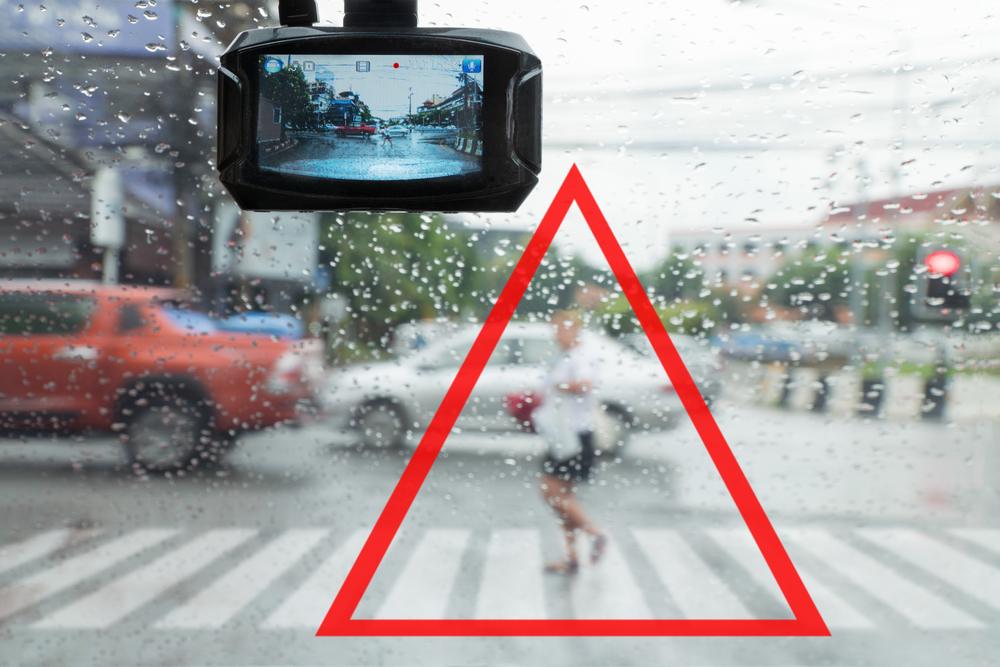
Pedestrian cases often turn on evidence that pins the collision to a specific moment: where the pedestrian was, which signal was active, and how the vehicle moved in the seconds before impact. Without that reconstruction, the claim relies on competing versions of events. With it, the right-of-way analysis has a factual anchor.
The types of documentation that help establish those facts include:
- The police crash report documents the officer's observations, witness statements, road conditions, and any citations issued to the driver.
- Intersection or business surveillance footage may capture the collision, the signal phase, and the movements of the pedestrian and vehicle before impact.
- Signal timing records from the municipality establish which phase was active at the time of the collision and help resolve right-of-way disputes.
- Photographs of the intersection, crosswalk markings, sight lines, and vehicle damage help reconstruct the physical layout and point of impact.
- Medical records link the injuries directly to the collision and document the treatment timeline, restrictions, and ongoing limitations.
Connecticut State Police maintains crash reports for incidents where troopers responded. Municipal police departments keep their own records. Call (877) 987-9529 to discuss the evidence in your claim.
How Do Serious Injuries Change What a Pedestrian Claim Is Worth?
Pedestrians have no vehicle frame, seatbelt, or airbag between their bodies and the striking vehicle. Fractures, head injuries, spinal injuries, and other serious trauma may create treatment and work losses that continue well after discharge. Initial care at a Connecticut trauma center like Yale New Haven Hospital or Hartford Hospital is often just the beginning of a long recovery.
How Do Future Care and Work Restrictions Affect a Pedestrian Claim?
The initial hospitalization often represents a fraction of the total medical cost and life impact. The losses that develop over months and years are where a claim's value grows most.
A serious pedestrian injury claim may include compensation across several categories:
- A claim may include surgical costs, inpatient rehabilitation, and follow-up care for fractures, internal injuries, or orthopedic damage from the collision.
- Lost income covers time away from work, including partial losses from reduced hours or job modifications during recovery.
- Diminished earning capacity may apply when permanent physical or cognitive limitations prevent a return to the same occupation or responsibility level.
- Future medical care may include orthopedic follow-ups, neurological monitoring, physical therapy, or cognitive rehabilitation over months or years.
- Compensation for pain and suffering, loss of independence, and the ongoing effect of injuries on daily life may form a significant portion of the claim.
Collisions that result in catastrophic pedestrian injuries such as traumatic brain injuries, spinal cord damage, or multiple fractures may require life-care planning to project future needs. The documented effect on the person's daily functioning drives much of the claim's value.
What Insurance Applies After a Pedestrian Collision in Connecticut?

The at-fault driver's liability insurance is usually the primary source of compensation. That process works similarly to Connecticut auto accident claims involving vehicle-to-vehicle collisions. Available liability coverage may pay covered damages up to the applicable policy limits.
What If the Driver Was Uninsured or Never Identified?
A hit-and-run pedestrian accident creates a different insurance picture. When the driver flees or is never identified, there may be no liable driver's policy to pursue.
UM/UIM coverage may be available through an auto policy that insures the injured pedestrian. Whether that coverage applies depends on the specific policy terms and the circumstances of the collision.
We evaluate every available coverage source when preparing a pedestrian claim. Identifying all applicable insurance early matters, because it shapes how the rest of the case is built.
What Is the Deadline to File a Pedestrian Injury Claim in Connecticut?
Connecticut General Statutes § 52-584 generally requires a negligence-based injury action within two years from the date the injury was first sustained, discovered, or reasonably ought to have been discovered. The statute also imposes a three-year outer limit from the act or omission.
The lawsuit deadline is not the only timing concern. Intersection or business surveillance footage may be overwritten well before the filing period runs out. Earlier review gives our attorneys more time to identify and request available video while it still exists.
What Is the Deadline After a Fatal Pedestrian Collision?
When a pedestrian collision results in death, a separate timeline applies. The estate's executor or administrator may bring an action for fatal pedestrian accidents and wrongful death under Connecticut General Statutes § 52-555. That statute generally requires filing within two years of the date of death and sets a five-year outer limit from the underlying act or omission.
FAQs for Connecticut Pedestrian Accident Claims
Do I Need a Lawyer After Being Hit by a Car While Walking in Connecticut?
Connecticut law does not require a lawyer after a pedestrian collision, but representation may be useful when fault, serious injuries, or insurance coverage is disputed. Our attorneys review the crossing situation and build the evidence to address those disputes.
What If a Pedestrian Accident Happens in a Parking Lot Instead of a Crosswalk?
Parking lot collisions fall outside Connecticut's crosswalk statutes. Liability turns on ordinary negligence principles rather than the right-of-way rules that apply at intersections and marked crossings. Driver speed, sight lines, pedestrian visibility, and the layout of the lot all become relevant evidence.
What If the Driver Was Working When They Hit a Pedestrian?
An employer may share liability when the driver was acting within the scope of employment at the time of the collision. Delivery drivers, commercial vehicle operators, and rideshare drivers create potential claims against both the driver and the employer or contracting company. Available insurance coverage may also differ from a standard personal auto policy.
What If I Do Not Remember How the Pedestrian Accident Happened?
A gap in memory does not prevent a pedestrian claim from moving forward. Surveillance footage, signal timing records, witness accounts, vehicle damage patterns, and the crash report may all help reconstruct what happened. Our attorneys piece together available evidence to build the case even when the injured person's memory is incomplete.
One Conversation May Change the Direction of Your Claim
A pedestrian accident claim raises questions that a phone call with an adjuster is not designed to answer. The crossing location, the applicable right-of-way rule, the driver's conduct, and the full scope of the injuries all factor into what fair compensation looks like.
The Flood Law Firm offers free consultations and handles qualifying cases on a contingency-fee basis. Call (877) 987-9529 or contact us online to talk through your pedestrian accident claim.
Flood Law Firm LLC - Connecticut Office
190 Washington Street
Middletown, CT 06457
P: (860) 346-2695