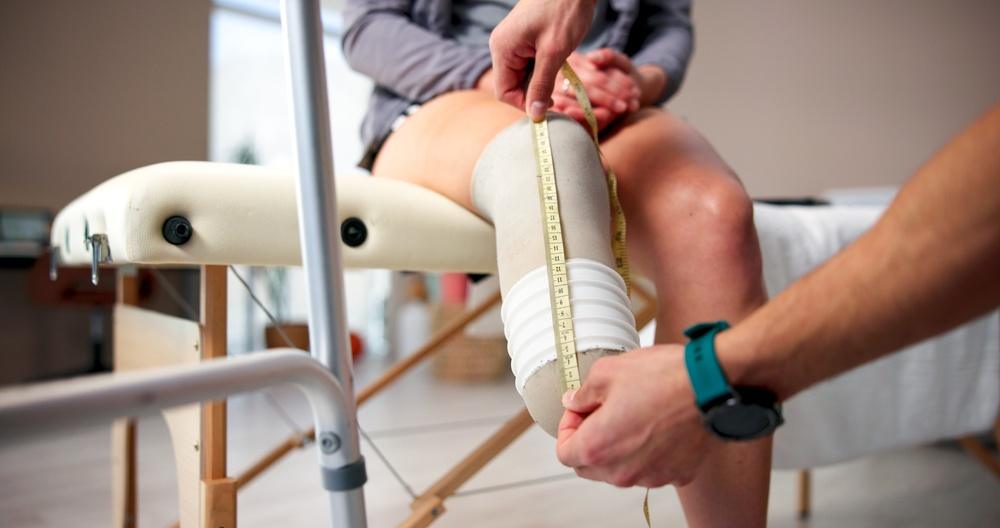
Losing a limb changes every ordinary day, and no one should have to rebuild a life while arguing with an insurance company. The Flood Law Firm's Connecticut amputation injury lawyers represent people who lost a limb, hand, foot, or fingers because someone else was careless.
We handle the investigation, the medical and financial proof, and the negotiations so your family can focus on recovery. If you or someone you love suffered an amputation in Connecticut, call The Flood Law Firm at 860-346-2695 for a free consultation, available 24/7.
- Do You Need an Amputation Injury Lawyer After Losing a Limb?
- What Causes Amputation Injuries in Connecticut?
- Damages in an Amputation Lawsuit: The Real Cost of Limb Loss
- How Are Future Costs Proven? Life Care Plans and Financial Analysis
- Workplace Amputations: Workers' Compensation and Third-Party Claims
- How Long Do You Have to File an Amputation Lawsuit in Connecticut?
- Why Families Trust The Flood Law Firm With Catastrophic Injury Cases
- FAQs: Amputation Injury Lawyer
- Moving Forward After Limb Loss
Do You Need an Amputation Injury Lawyer After Losing a Limb?

You need an amputation injury lawyer when someone else's negligence caused the limb loss because the lifetime costs usually far exceed an insurer's early offer. Those decades of future expenses are easy to undervalue in the first months after an injury. A lawyer's job is to find every responsible party and prove what the injury will cost over a lifetime.
Traumatic and Surgical Amputations
Amputation claims can arise in two ways. A traumatic amputation happens at the moment of injury, such as in a crash or machinery accident. A surgical amputation happens later, when doctors remove a limb that was crushed, burned, or infected beyond saving, and that loss can still be traced back to the original negligence.
What Causes Amputation Injuries in Connecticut?
Most amputation injuries in Connecticut come from high-force accidents or from medical complications that went untreated. The cause matters because it determines who can be held responsible and which deadlines apply. Limb loss claims commonly arise from these situations:
- A worker's arm or hand is caught in machinery that lacked proper guarding.
- A car, motorcycle, or pedestrian crash crushes or severs a limb.
- A truck collision causes catastrophic leg or arm injuries.
- A construction site accident involves falling loads, equipment, or unsafe scaffolding.
- A surgical error or an untreated infection leads to the loss of a limb.
- A defective tool, machine, or product fails in a way its maker should have prevented.
Each of these claims follows different rules, which is why the first step in any amputation case is finding out exactly how and why the injury happened.
Damages in an Amputation Lawsuit: The Real Cost of Limb Loss
Damages in an amputation lawsuit cover both the losses you've already had and the costs you'll face for the rest of your life. Connecticut law lets injured people recover economic losses, like medical bills and lost income, and non-economic losses, like pain and lost enjoyment of life. In a limb loss case, future costs often make up the largest share of the claim.
The table below shows the categories that typically drive an amputation settlement or verdict.
| Damage Category | What It Can Include |
|---|---|
| Prosthetics | The first device, fittings, repairs, and replacements over a lifetime |
| Medical care | Surgeries, hospital stays, wound care, and treatment for phantom limb pain |
| Rehabilitation | Physical and occupational therapy and gait training |
| Home and vehicle changes | Ramps, accessible bathrooms, hand controls, and vehicle modifications |
| Lost earning capacity | Income lost now and the reduced ability to earn in the future |
| Long-term care | In-home help, assisted daily living, and caregiver support |
| Non-economic losses | Physical pain, emotional distress, and loss of enjoyment of life |
Why Prosthetics Cost More Than People Expect
A prosthetic limb is not a one-time purchase. Devices wear out, the residual limb changes shape over time, and many people need replacements every few years, along with repairs and new sockets. A claim that only accounts for the first prosthesis can leave a client short for decades.
Devices also vary widely. A microprocessor knee or a myoelectric hand costs far more than a basic device, so the claim should reflect the prosthesis your doctors actually recommend, not the cheapest option an insurer suggests.
How Are Future Costs Proven? Life Care Plans and Financial Analysis
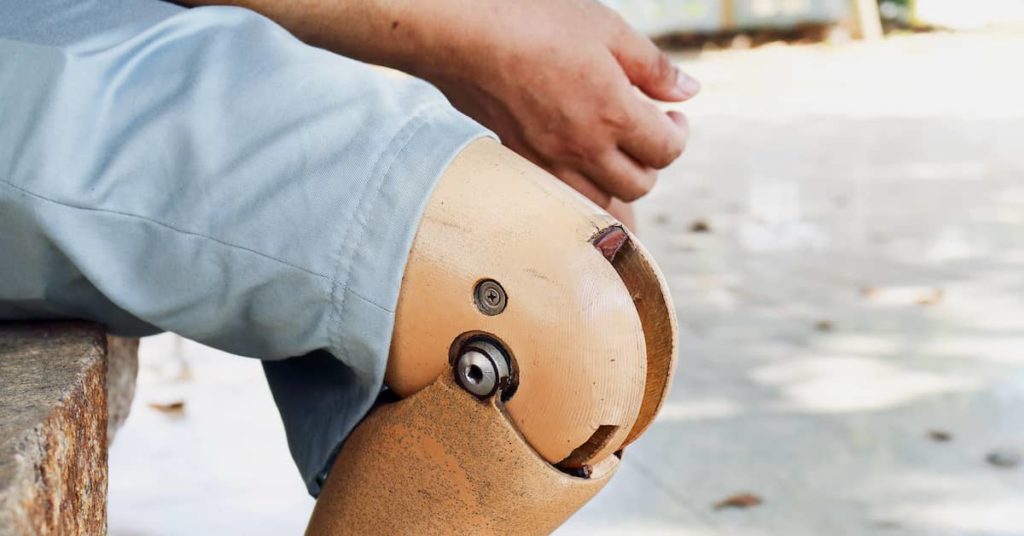
Future costs in an amputation case are proven through a life care plan, a detailed projection of every medical and support need over the person's expected lifetime. Insurers often dispute future damages because they haven't happened yet. A well-supported life care plan turns those future needs into specific, documented numbers that a jury can rely on.
What a Life Care Planner Does
A life care planner, often a nurse or rehabilitation professional, reviews the medical records, meets with the injured person, and consults with treating doctors. The plan lists each future need, how often it will be required, and what it will cost. A typical plan for an amputation addresses these needs:
- Prosthetic devices are scheduled for replacement, repair, and refitting over the person's lifetime.
- Ongoing therapy, office visits, and medications are projected year by year.
- Home care and help with daily tasks are estimated by the hour.
- Mobility equipment, such as wheelchairs or adaptive devices, is listed with replacement dates.
- Home and vehicle modifications are priced, along with when they will need to be redone.
Each item is tied to a medical recommendation, which makes the plan harder for an insurer to dismiss.
Turning the Plan Into Present-Day Value
An economist then calculates the present value of those future costs and the person's lost earning capacity. Vocational evaluators can also testify about which jobs the person can still perform after an amputation. Together, this testimony gives the court a clear, defensible picture of lifetime losses rather than a rough estimate.
Workplace Amputations: Workers' Compensation and Third-Party Claims
Many amputations happen on the job, and in Connecticut, workers' compensation is usually the only remedy against an employer. That doesn't always end the case. When someone other than the employer contributed to the injury, the injured worker can also bring a separate personal injury claim against that third party.

Who Can Be a Third Party?
A third party is anyone outside the employer relationship whose negligence caused the injury. Common examples include a machine manufacturer that left off a safety guard, a contractor on a shared construction site, or a driver who hit you while you were working. Connecticut's third-party liability statute preserves the right to bring these claims.
How the Two Claims Interact
Connecticut workers' compensation pays a set number of weeks of benefits for the permanent loss of a body part under its permanency schedule, such as 208 weeks for an arm lost at or above the elbow and 155 weeks for a leg lost at or above the knee. Those benefits are a percentage of your earnings and are capped by statute, so they rarely match the lifetime cost of limb loss.
A third-party claim can recover losses that workers' compensation doesn't cover, including pain and suffering and full lost earning capacity. The employer or its insurer has a right to be reimbursed from the third-party recovery for benefits it paid, so coordinating both claims carefully protects how much you keep.
How Long Do You Have to File an Amputation Lawsuit in Connecticut?
Most Connecticut amputation lawsuits must be filed within two years, but the deadline can change depending on how the injury happened. Claims involving medical care or a defective product follow different time limits, and some include an outer limit that can't be extended. The table below summarizes the main deadlines.
| Type of Claim | General Deadline in Connecticut |
|---|---|
| Negligence, such as a car or truck crash | Two years from the date the injury was sustained or discovered, under the personal injury statute of limitations |
| Medical malpractice | Two years from discovery, no more than three years from the act or omission, plus a written opinion from a similar health care provider |
| Defective product | Three years from when the injury was sustained or discovered, generally no more than 10 years after the defendant last parted with the product, under the product liability time limit |
| Wrongful death | Two years from the date of death and no more than five years from the act or omission |
Exceptions can apply, including claims against government entities that may require early written notice. Because these deadlines vary, speaking with a lawyer soon after the injury protects every option you have.
Why Families Trust The Flood Law Firm With Catastrophic Injury Cases

Families choose The Flood Law Firm for amputation cases because we prepare every case as if it will go to trial. Our tagline, "Real Trial Lawyers. Real Results," describes how we work, not just how we advertise. Insurers evaluate claims differently when they know the lawyers on the other side are ready to present a case to a Connecticut jury.
What clients can expect from our team:
- Our founding partner, Brian Flood, is a Fellow of the American College of Trial Lawyers and a member of the American Board of Trial Advocates.
- Other attorneys refer difficult injury cases to our firm, including catastrophic claims they aren't equipped to try.
- We gather testimony from doctors, economists, and other professionals to document lifetime losses.
- We take cases on a contingency fee basis, so there's no attorney fee unless we recover compensation for you.
Our published results include a $7.49 million jury verdict in a spinal fusion case and a $4.5 million settlement for a pedestrian with a femur injury. Every case depends on its own facts, and past results do not predict future outcomes.
If an amputation has turned your life upside down, call 860-346-2695 for a free consultation with our team.
FAQs: Amputation Injury Lawyer
How much is an amputation lawsuit settlement worth?
A Connecticut amputation settlement is built from the lifetime cost of the injury: prosthetic and medical care, lost earning capacity, and pain and suffering, limited in practice by the insurance available. Which limb was lost, the person's age and occupation, and how clearly liability can be proven move that number the most, so no standard value fits every case.
Does health insurance cover prosthetic limbs in Connecticut?
Many Connecticut health insurance policies must cover prosthetic devices at a level at least equal to Medicare, under a state law that took effect in 2019. Self-insured employer plans are exempt under federal law, so coverage turns on the type of plan, and out-of-pocket costs can still be recovered as damages in an injury claim.
What if I was partly at fault for the accident that caused my amputation?
You can still recover compensation in Connecticut if you were partly at fault, as long as your share of fault isn't greater than the combined fault of the others responsible. Under the state's comparative negligence statute, your award is reduced by your percentage of fault.
Can my spouse recover damages after my amputation?
Yes, a spouse can bring a loss of consortium claim in Connecticut for the loss of companionship, support, and household services caused by a serious injury. This claim is tied to the injured person's own case and rises or falls with it.
Can I recover compensation for phantom limb pain?
Yes, phantom limb pain can be part of the pain and suffering and medical damages in a Connecticut amputation claim. Treatment records, medication history, and testimony about how the pain affects sleep and daily activities help show its impact.
Who pays for my prosthetic while my amputation case is pending?
Health insurance or workers' compensation usually pays for early prosthetic care while a Connecticut injury claim is pending. Connecticut's anti-subrogation statute bars many private health insurers from recovering those payments from your settlement, though workers' compensation, Medicare, Medicaid, and self-funded employer plans can seek repayment.
Will my amputation case go to trial?
Most Connecticut amputation cases resolve through settlement, but cases with high lifetime damages are more likely to be contested. Preparing a claim for trial from the start often affects how seriously an insurer evaluates a settlement offer.
Moving Forward After Limb Loss
An amputation is permanent, but the decisions you make in the first months can shape the support you'll have for years to come. You don't have to sort out insurance, medical bills, and liability questions on your own.
The Flood Law Firm advocates for individuals and families throughout Connecticut, and our team is available 24/7. Call 860-346-2695 or reach out online for a free consultation about your amputation injury claim.