The I-84 corridor through Danbury has been one of the most active highway construction zones in Connecticut for years. Lane shifts, narrowed shoulders, and heavy equipment operating alongside high-speed traffic create conditions where serious accidents happen.
Highway work zone accident lawyers in Danbury handle cases where injured road workers and drivers face a complicated question: who is responsible when a crash happens inside a construction zone?
The answer depends on what caused the accident, not just where it happened. A distracted driver who strikes a road worker bears a different kind of liability than a contractor who set up barriers incorrectly or a state agency that approved an unsafe traffic control plan.
In many I-84 work zone cases, more than one party shares responsibility, and the available legal options depend on identifying each party.
Key Takeaways for I-84 Construction Zone Accidents
- Work zone accidents on I-84 may involve liability from negligent drivers, private contractors, the Connecticut DOT, or a combination of all three.
- Connecticut law allows two years from the date of injury to file most personal injury claims under Connecticut General Statutes § 52-584, including work zone injury claims.
- Road construction workers injured by a passing motorist may have a third-party personal injury claim in addition to workers' compensation benefits.
- Claims against state agencies like the Connecticut DOT involve specific procedural requirements, including notice provisions that differ from standard personal injury lawsuits.
- I-84 widening project accidents near Danbury involve high traffic volume, lane shifts, and reduced visibility, all of which may factor into how liability is determined.
Why I-84 Construction Zones Create Elevated Risk
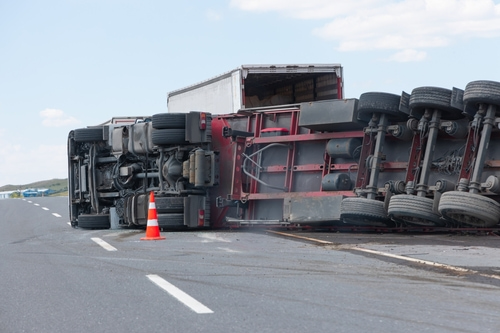
The I-84 widening and bridge construction projects near Danbury have reshaped traffic patterns along one of Connecticut's busiest highway corridors. These projects involve years of active construction, meaning workers and drivers share the road under hazardous conditions for extended periods.
If a car hits you while working on I-84, the driver is usually liable—but the contractor or Connecticut DOT may also share responsibility if safety barriers or traffic controls were inadequate.
Traffic Volume and Lane Shifts on I-84
I-84 carries tens of thousands of vehicles daily through the Danbury area. Construction zones compress that traffic into narrower lanes with shifting merge points. Drivers who are unfamiliar with the current configuration, distracted, or traveling too fast face a higher risk of losing control or striking workers and equipment.
Speed, distraction, and inadequate traffic control are leading contributors to construction zone accidents throughout the country. These same factors are present along the I-84 corridor, particularly during peak commute hours and overnight work shifts when visibility drops.
Reduced Visibility and Nighttime Hazards
Many I-84 construction activities happen overnight to reduce traffic disruption. Nighttime work introduces reduced visibility for both drivers and workers. When lane markings are temporary, signage is inconsistent, or lighting is inadequate, the risk of a serious crash increases.
A road construction worker injury on I-84 during overnight hours may involve questions about whether traffic control measures met federal and state safety standards. These questions are central to determining liability.
Who Is Liable in a Highway Work Zone Accident?
Determining who is liable in a highway work zone accident requires examining what caused the crash and who controlled the conditions leading up to it. On I-84 construction projects, multiple parties may share responsibility.
Who pays if a car hits you while working on I-84?
In most cases, the driver who hit you is responsible. However, you may also have claims against the construction contractor or the Connecticut DOT if unsafe traffic control, missing barriers, or poor signage contributed to the accident.
Negligent Drivers in Construction Zones
Suing a negligent driver in a construction zone follows the same general principles as any motor vehicle accident claim. The driver must have acted carelessly, and that carelessness must have caused the injury.
In a work zone, common driver behaviors that support a claim include speeding through reduced-speed areas, texting or otherwise driving while distracted, and ignoring posted signage.
Distracted driving in a construction zone in CT is a frequent factor in work zone crashes. Connecticut law prohibits handheld phone use while driving under Connecticut General Statutes § 14-296aa. When a driver violates this law and strikes a worker, the violation may serve as evidence of negligence.
DOT Liability for Road Worker Injuries
The Connecticut Department of Transportation oversees highway construction projects, approves traffic control plans, and sets standards for work zone safety. When the DOT approves an inadequate traffic control plan, fails to maintain proper signage, or neglects to correct known hazards, DOT liability for a road worker injury may exist.
Claims against the state involve specific rules. Connecticut's claims process for state liability requires compliance with notice provisions and follows procedures that differ from a standard personal injury lawsuit. Working with an attorney who is familiar with these requirements helps preserve the claim within the required timeframes.
Contractor and Subcontractor Liability
Private contractors and subcontractors perform most of the physical construction work on I-84 projects. They install barriers, manage lane closures, and operate heavy equipment. When a contractor sets up traffic control improperly, fails to maintain barriers, or creates an unsafe condition on the roadway, that contractor may bear liability for injuries that result.
A Danbury construction accident lawyer who handles highway work zone cases understands how to identify each responsible party and evaluate where liability falls based on the specific conditions of the crash.
Driver vs. DOT vs. Contractor: How Liability Is Determined
Responsibility in a work zone accident depends on the specific cause. The same crash site may produce different liability outcomes depending on what failed.
| Scenario | Likely Responsible Party |
| Distracted driver hits a worker | Driver |
| Missing or incorrect barriers | Contractor or DOT |
| Poor signage or lane markings | DOT or contractor |
| Equipment failure on the roadway | Contractor or manufacturer |
This framework illustrates why investigation matters. Determining whether the crash resulted from driver error, a traffic control failure, or an equipment defect shapes the entire direction of the claim.
Connecticut Work Zone Accident Claims for Injured Road Workers
Road construction workers who have been injured on I-84 often have more legal options than they initially realize. Workers' compensation covers medical treatment and partial wages, but it does not cover pain and suffering or the full scope of lost income. A Connecticut work zone accident claim against a negligent third party may provide a path to broader recovery.
Workers' Comp vs. Third-Party Claims
An injured road worker receives workers' comp through their employer, whether that employer is a private contractor or a subcontractor working on the I-84 project. A third-party claim targets a different party, such as the negligent driver who entered the work zone or the contractor who failed to install proper barriers.
Both paths may proceed at the same time. Workers' comp provides immediate medical coverage and partial wage replacement. The third-party claim addresses losses that workers' comp does not cover.
What a Third-Party Claim May Include
A third-party claim for a road construction worker injury on I-84 may include compensation for several categories of loss that workers' comp excludes.
The following damages may be available through a third-party personal injury claim:
- Pain and suffering: Physical discomfort and emotional distress caused by the injury and its aftermath.
- Full lost wages: The complete amount of income lost due to the injury, rather than the partial replacement workers' comp provides.
- Loss of future earning capacity: Reduced ability to work in the same trade or earn at the same level over time.
- Out-of-pocket costs: Expenses for transportation to medical appointments, home modifications, or other injury-related needs not covered by workers' comp.
Each of these categories requires documentation. Medical records, employment history, and evidence of daily limitations all contribute to establishing the claim's value.
How a Highway Work Zone Accident Lawyer in Danbury Investigates These Cases
Work zone accident cases require prompt investigation. Highway construction zones change configuration frequently, meaning the conditions that existed at the time of the crash may look entirely different within days or even hours.
Preserving Evidence From the Scene
A Danbury highway construction accident lawyer begins by identifying and preserving evidence before it disappears. On I-84 projects, relevant evidence may include traffic camera footage, daily work logs, traffic control setup records, barrier placement documentation, and photographs of signage and road markings.
Connecticut DOT project files and contractor daily reports may also contain information about known hazards, prior incidents in the same zone, or deviations from the approved traffic control plan. Obtaining these records often requires formal legal requests.
Identifying All Responsible Parties
Highway work zone cases on I-84 may involve the driver who caused the crash, the general contractor managing the project, a subcontractor responsible for traffic control setup, the equipment manufacturer if a safety device failed, and the Connecticut DOT if the approved plan was inadequate.
The following parties commonly bear responsibility in I-84 construction zone accidents:
- The at-fault driver: A motorist who was distracted, speeding, or otherwise negligent when entering or passing through the work zone.
- The general contractor: The company managing the overall construction project and overseeing site safety.
- The traffic control subcontractor: The company responsible for setting up and maintaining barriers, signs, and lane markings.
- The Connecticut DOT: The state agency that approved the traffic control plan and oversaw the project.
- Equipment manufacturers: Companies that supplied barriers, attenuators, or other safety devices that failed.
Identifying all responsible parties early prevents the claim from being limited to a single source of recovery.
CT DOT Indemnification and State Liability
Filing a claim involving CT DOT indemnification and state liability adds procedural complexity. The state of Connecticut has specific rules that govern how and when injury claims against state agencies must be filed.
How Claims Against the State Differ
Connecticut does not waive sovereign immunity for all injury claims. Claims against the DOT for highway work zone injuries often proceed through the Office of the Claims Commissioner or through specific statutory provisions that allow suits against the state under limited circumstances. The procedures, notice requirements, and timelines differ from standard personal injury lawsuits.
CT DOT Indemnification in Contractor Agreements
Many highway construction contracts between the DOT and private contractors include indemnification clauses. These clauses define which party bears financial responsibility when an injury occurs. In some cases, the contractor agrees to indemnify the DOT, meaning the contractor's insurance responds first.
CT DOT indemnification provisions affect how claims are structured and which insurance policies are available to cover the injured worker's losses. Understanding these contract terms is part of building a complete claim after a work zone accident.
Reckless Endangerment in Work Zones and Enhanced Penalties

Connecticut law treats certain work zone violations more seriously than standard traffic offenses. Reckless endangerment in a work zone in Connecticut may carry enhanced penalties under state traffic law, and these violations may also support a civil claim for damages.
How Enhanced Penalties Affect a Civil Claim
When a driver is cited for reckless behavior in a construction zone, that citation may serve as evidence of negligence in a personal injury claim. A driver who ignored posted speed reductions, passed through barricaded areas, or drove under the influence in an active work zone may face both criminal penalties and civil liability.
The enhanced penalty structure reflects the recognized danger of work zones. From a legal perspective, these penalties reinforce the argument that the driver's behavior fell below the standard of care owed to workers and other motorists in the zone.
Distracted Driving in Construction Zones on CT Highways
Distracted driving in a construction zone in CT is one of the most common causes of worker injuries on I-84 and other state highways. Connecticut's handheld device ban applies everywhere, but the consequences of distraction are amplified in construction zones where lanes narrow, traffic patterns shift, and workers operate just feet from moving vehicles.
Distracted driving is a leading factor in work zone crashes. When a distracted driver strikes a road worker on an I-84 project, the violation of Connecticut's distracted driving law may serve as direct evidence supporting the injured worker's claim.
FAQ for I-84 Work Zone Accident Claims
Do I have to choose between workers' comp and a lawsuit?
No. Workers' compensation and a third-party personal injury claim are separate legal paths. Filing for workers' comp does not prevent a lawsuit against a negligent driver, contractor, or the DOT. Both may proceed at the same time.
What if I was partially at fault for the accident?
Connecticut follows a modified comparative fault rule. An injured person may still recover compensation as long as their share of fault does not exceed 50%. The recovery amount is reduced by the percentage of fault assigned to the injured party.
How long do I have to file a claim after a work zone accident on I-84?
Connecticut law sets a two-year deadline for most personal injury claims under § 52-584. Claims against the state may have additional notice requirements with shorter deadlines. Consulting with an attorney early helps preserve all available options.
What if the contractor claims the DOT approved the traffic plan?
DOT approval of a traffic control plan does not automatically shield the contractor from liability. If the contractor deviated from the plan, implemented it incorrectly, or failed to adjust for changing conditions, the contractor may still bear responsibility for injuries that result.
After the Crash, Answers Matter More Than Uncertainty
Work zone injuries on I-84 involve layered questions about who controlled the conditions, who failed to act, and who bears responsibility. At The Flood Law Firm, our attorneys handle complex highway construction cases referred by other Connecticut lawyers, including cases involving multiple liable parties, state agency claims, and catastrophic injuries.
If you or a family member was injured in an I-84 construction zone, our Danbury office is ready to evaluate your situation. Contact us at (203) 448-2631 for a free consultation. There are no upfront fees, and we take calls in English and Spanish.