Workers' compensation limits what an injured construction worker can receive. It covers medical bills and a portion of lost wages, but it does not cover pain and suffering, full income loss, or the long-term impact of a serious injury. For many workers in Connecticut, a third-party construction accident claim against the general contractor may provide a path to broader recovery that workers' comp alone does not offer.
General contractors run the job site. They control safety protocols, direct work activities, and coordinate subcontractors. They also tend to carry significantly larger insurance policies than the subcontractors who employ most of the workers on site.
When a general contractor's negligence contributes to an injury, that larger policy becomes relevant. A third-party claim against the general contractor is not a loophole. It is a recognized legal pathway under Connecticut law, and it exists because responsibility on a construction site extends beyond a single employer.
Key Takeaways for Third-Party Construction Accident Claims in CT
- Workers' compensation covers medical bills and partial wages but does not include pain and suffering, full lost income, or long-term damages.
- A third-party claim targets a negligent party other than the direct employer, most often the general contractor who controls the construction site and carries a larger insurance policy.
- Connecticut law allows two years from the date of injury to file a personal injury claim under Connecticut General Statutes § 52-584.
- Filing a workers' comp claim does not prevent a separate lawsuit against a negligent third party. Both paths may proceed at the same time.
- The general contractor's level of control over site conditions is a central factor in determining whether a third-party claim is viable.
Why Workers' Comp Is Not Always the Only Option
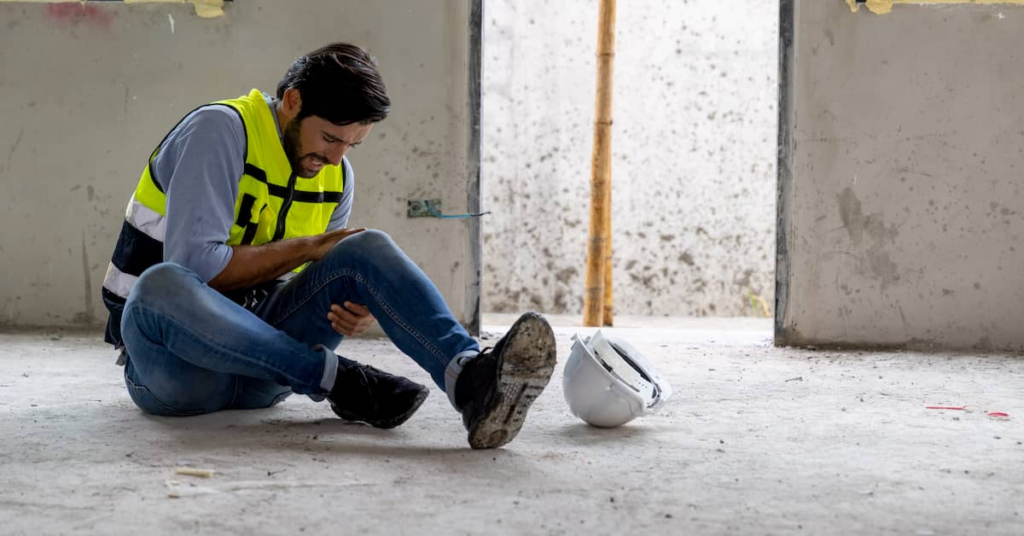
Workers' compensation provides injured employees with medical coverage and partial wage replacement without requiring proof of fault. In exchange, employees generally give up the right to sue their own employer. This tradeoff is sometimes called the "exclusive remedy" rule.
Understanding the Exceptions to Workers' Comp Exclusivity
The exceptions to workers' comp exclusivity matter for construction workers because job sites involve multiple companies working under one general contractor. A subcontractor's employee receives workers' comp through that subcontractor. But the general contractor is a separate entity, not the worker's employer.
That distinction opens the door. Because the general contractor is not the worker's employer, the exclusive remedy rule does not protect them. If the general contractor's negligence contributed to the injury, a third-party personal injury claim may be available.
How This Plays Out on a Connecticut Construction Site
Consider a worker who is employed by a framing subcontractor on a commercial project along the I-84 corridor near Danbury. The general contractor fails to install guardrails on an upper floor. The worker falls and suffers a serious injury. Workers' comp through the framing company covers medical bills and a portion of lost wages, but nothing more.
The general contractor, who controlled site safety decisions, may also bear liability through a separate personal injury claim. That claim may include pain and suffering, the full amount of lost income, and long-term damages that workers' comp leaves out entirely.
Why the General Contractor's Insurance Policy Matters
On most multi-contractor construction sites, the general contractor carries the largest insurance policy. Subcontractors, particularly smaller framing, electrical, or concrete crews, often carry minimum coverage. This practical reality directly affects what an injured worker may recover.
The "Deep Pocket" on the Job Site
A workers' comp claim against a small subcontractor provides limited benefits by design. A third-party claim against the general contractor taps into a different and often substantially larger insurance pool. For a worker with a spinal injury, a traumatic brain injury, or another catastrophic outcome, the difference between these two recovery paths may be significant.
This is not about targeting the largest company for its own sake. It is about holding the party responsible for site safety accountable through the insurance coverage that exists precisely for this purpose. General contractors carry larger policies because they assume broader responsibility. When they fail to meet that responsibility, the policy responds.
How Claim Value Changes With a Third-Party Path
Workers' comp benefits are calculated by a formula. Connecticut law sets the wage replacement rate and caps certain benefits. There is no room for negotiation based on the severity of the injury's impact on daily life.
A third-party claim is evaluated differently. Factors like the permanence of the injury, the worker's age and earning capacity, the cost of future care, and the impact on quality of life all factor into the claim's value. Access to the general contractor's policy means these broader damages have a realistic source of recovery behind them.
Workers' Comp vs. Personal Injury in a Construction Accident in CT
The difference between these two paths helps explain why pursuing both matters. Workers' comp vs. personal injury in a construction accident in CT comes down to scope and purpose.
What Each Path Covers
| Workers' Compensation | Third-Party Claim | |
| Benefits | Medical bills and partial wages | Broader compensation, including pain and suffering |
| Pain and suffering | Not included | May be included |
| Proof of fault | Not required | Requires proving negligence |
| Recovery limits | Set by a statutory formula | Based on actual damages and available insurance |
Workers' comp provides a financial floor. A third-party claim addresses the losses that workers' comp leaves out, including the full impact of the injury on earning capacity, daily life, and long-term well-being.
Can Both Claims Run at the Same Time?
Yes. Filing a workers' comp claim does not block a third-party lawsuit. The two proceed on separate tracks. If the third-party claim results in recovery, the workers' comp insurer may seek reimbursement for benefits already paid, a process called subrogation.
A Danbury construction accident lawyer who is familiar with multi-party construction cases helps coordinate both paths to avoid conflicts.
Who Is Liable on a Construction Site in Connecticut?
Construction sites involve general contractors, subcontractors, property owners, equipment suppliers, and sometimes government entities. Sorting out who is liable on a construction site in Connecticut depends on who controlled the conditions that led to the injury.
Suing the General Contractor for Negligence
A general contractor who oversees a construction project holds broad responsibility for site safety. OSHA regulations require that controlling entities maintain safe working conditions, provide fall protection, and enforce safety standards.
Suing a general contractor for negligence in Connecticut often centers on the contractor's failure to meet these obligations. When a general contractor knows about a hazard, or when the hazard exists because of decisions the contractor made about how work is organized, that failure may support a personal injury claim.
The Control of Premises Test in Connecticut
Connecticut courts evaluate third-party liability on construction sites partly through the control of premises test. This legal standard asks whether the third party exercised sufficient control over the work area where the injury happened.
The rule works like this: if the general contractor controls the conditions of the site, including access, safety measures, and work coordination, the contractor may owe a duty of care to workers employed by subcontractors. The control of premises test in Connecticut focuses on practical authority over the job site, not just the contractual relationship between parties.
For example, if a general contractor on a Danbury project directed where scaffolding was placed and how work zones were organized, that level of control may create liability for injuries in those areas.
Principal Employer Liability in Connecticut
Connecticut law includes a concept called principal employer liability. Under Connecticut General Statutes § 31-291, a principal employer may be responsible for providing workers' compensation benefits to employees of subcontractors when the subcontractor fails to carry coverage.
What This Means in Practice
This statute protects workers on multi-contractor job sites. If a subcontractor does not have workers' comp insurance, the general contractor may step into that role by law. Principal employer liability in Connecticut applies specifically to workers' comp obligations and is separate from third-party negligence claims.
However, it reinforces the principle that general contractors bear significant responsibility for every worker on their sites, even those employed by other companies. Both the statutory framework and the third-party claim pathway recognize that the party with the most control often carries the most responsibility.
What Makes a Strong Subcontractor Injury Lawsuit Against a General Contractor?
Not every construction injury supports a third-party claim. The strength of a subcontractor injury lawsuit depends on evidence connecting the general contractor's negligence to the injury.
The following elements often play a central role in these cases:
- Site control evidence: Documentation showing the general contractor directed work activities, safety measures, or site access in the area where the injury occurred.
- OSHA citations or inspection records: Official findings that the general contractor violated specific safety standards under OSHA construction regulations.
- Safety meeting logs: Records showing whether the general contractor conducted safety briefings, enforced protective equipment use, or addressed known hazards.
- Subcontractor agreements: Contracts that define safety responsibilities and reveal how duties were divided on the job site.
- Witness testimony: Statements from coworkers who observed conditions that led to the injury or who saw the general contractor's role in site management.
Gathering this evidence early matters. Construction sites change quickly, and conditions present at the time of injury may disappear within days.
Mistakes That May Weaken a Third-Party Construction Claim in CT
Certain missteps after a construction injury may affect the strength of a third-party claim. Awareness of these pitfalls helps protect the claim from the start.
The following mistakes may reduce the value or viability of a third-party construction accident claim in CT:
- Failing to report the injury promptly: Delayed reporting creates gaps that opposing parties may use to question severity or cause.
- Not documenting site conditions: Photographs of the accident scene, equipment, and surrounding conditions become harder to obtain as work continues.
- Giving recorded statements without legal guidance: Insurance adjusters for the general contractor may request statements early, and those statements may be used to limit liability later.
- Assuming workers' comp is the only option: Many injured workers never explore a third-party claim because they are told workers' comp covers everything. In cases involving general contractor negligence, that assumption may leave significant compensation unrecovered.
Avoiding these missteps preserves the evidence and legal options that matter most.
Construction Site Liability in Danbury, CT
Danbury's construction environment reflects the broader Fairfield County market. Active commercial and residential development along the I-84 corridor and throughout the surrounding area keeps multi-contractor job sites common. The layered structure of subcontractors working under a general contractor creates the conditions where third-party claims frequently arise.
Connecticut's two-year statute of limitations under § 52-584 applies to these claims. This deadline runs from the date of injury, and missing it may eliminate the right to file against the general contractor entirely. Construction site liability in Danbury, CT, involves the same principles that apply statewide, but local project conditions and Fairfield County court procedures add layers that matter in how these cases are prepared.
FAQ for Third-Party Construction Accident Claims in CT
Can I sue the general contractor if my own employer was also at fault?
What if my employer tells me not to file a third-party claim?
An employer does not have the authority to prevent a worker from filing a third-party personal injury claim. The two legal paths are independent. An employer's workers' comp obligations and a general contractor's negligence liability are separate legal matters.
What damages are available in a third-party claim that workers' comp does not cover?
A third-party claim may include compensation for pain and suffering, the full amount of lost wages rather than the partial amount workers' comp provides, loss of future earning capacity, and other non-economic damages. Workers' comp does not cover any of these categories.
How does subrogation work if I receive both workers' comp and a third-party recovery?
If a third-party claim results in compensation, the workers' comp insurer may seek reimbursement for medical and wage benefits that have already been paid. This process is called subrogation. It is governed by Connecticut statute and typically involves negotiation between the parties.
Does the size of the general contractor's insurance policy affect my claim?
The general contractor's policy does not change the legal merits of a claim, but it affects the practical recovery available. A larger policy means there is a more realistic source of compensation for serious injuries, particularly when the damages exceed what a smaller subcontractor's coverage provides.
When Workers' Comp Is Not Enough, Another Path May Exist
At The Flood Law Firm, our attorneys handle the complex construction injury cases that other Connecticut lawyers refer to us, including multi-party claims involving general contractor negligence, OSHA violations, and severe injuries that exceed what workers' comp provides. We understand how to identify the responsible parties and build third-party claims that pursue fair compensation through the insurance coverage that matters most.
If you were injured on a construction site and believe a general contractor or another third party contributed to the accident, our team is ready to evaluate your situation. Contact our Danbury office at (203) 448-2631 for a free consultation. There are no upfront fees, and we take calls in English and Spanish.