Connecticut's mode of operation rule may allow injured shoppers at Brass Mill Center to pursue compensation without proving the mall knew about the exact spill beforehand. Under this doctrine, a Brass Mill Center injury lawyer may build a claim by showing that the business model itself creates predictable, recurring dangers.
This matters for shoppers injured in self-service areas like the Brass Mill Center food court in Waterbury. Understanding how Connecticut courts apply this rule helps clarify whether a claim has legal support and what evidence matters most.
Can You Sue After a Slip and Fall at Brass Mill Center?
Yes. Connecticut's "mode of operation" rule may allow injured shoppers to pursue compensation after a Brass Mill Center slip and fall without proving the mall knew about the exact spill beforehand. The rule applies when a business's self-service setup creates a foreseeable recurring hazard, such as spills near a crowded food court beverage station.
Key Takeaways for Brass Mill Center Injury Claims
- Connecticut's "mode of operation" rule may eliminate the need to prove a mall or store had actual knowledge of a specific spill or hazard before an injury occurred.
- The Connecticut Supreme Court adopted this doctrine in Kelly v. Stop & Shop, Inc., applying it to businesses whose self-service operations create foreseeable recurring hazards.
- Brass Mill Center's food court, self-service beverage stations, and high-traffic entrance areas during Connecticut winters all create conditions where the doctrine may apply.
- Mall property owners also have a duty to provide reasonable security, and a pattern of prior violent incidents may support a negligent security claim.
- Connecticut follows a two-year statute of limitations for most personal injury claims under General Statutes § 52-584, making early evidence preservation critical.
What Is Connecticut's "Mode of Operation" Rule?
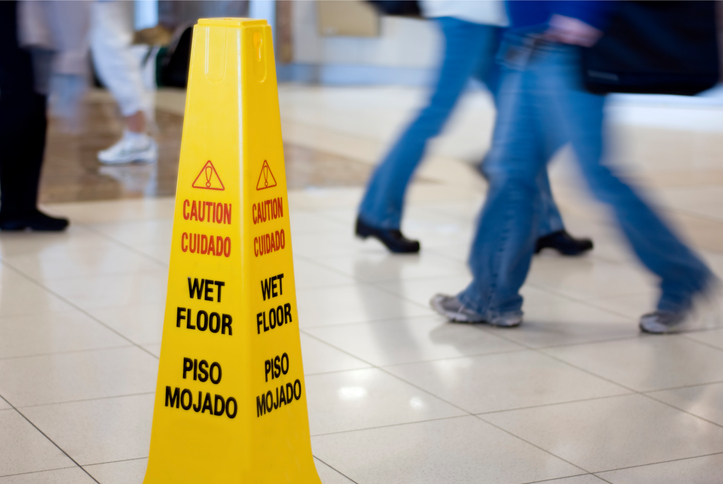
Connecticut's mode of operation rule allows injured customers to pursue premises liability claims without proving that the business had actual notice of the specific hazard. Instead, the injured person must show that the business operated in a way that made recurring hazards predictable.
In traditional slip and fall cases, the injured person must prove that the property owner knew or had reason to know about a dangerous condition. The mode of operation doctrine changes that analysis for businesses whose self-service format regularly creates hazards as a byproduct of operations.
What Qualifies as a Self-Service Business Operation?
A self-service operation is any business model that invites customers to handle products, serve food, or pour beverages without direct employee involvement at every step. Grocery store produce sections, mall food court beverage stations, and buffet-style restaurants all fit this description.
The key factor is whether the business model creates conditions where spills, dropped food, or wet floors occur regularly as part of normal customer activity. When that pattern exists, Connecticut courts may apply the mode of operation rule rather than requiring proof that an employee saw the specific hazard.
Does the Rule Apply Outside Grocery Stores?
The doctrine applies to any business that operates a self-service model that creates predictable recurring hazards. Mall food courts, self-serve beverage stations, salad bars, and similar setups all fall within its reach.
Brass Mill Center's food court area, where multiple vendors serve food and customers carry trays, drinks, and condiments across shared seating areas, fits this framework. Spills in that environment are a predictable result of how the space operates.
How Did Kelly v. Stop & Shop Change Connecticut Slip and Fall Cases?
The Connecticut Supreme Court adopted the mode of operation rule in Kelly v. Stop & Shop, Inc., holding that self-service businesses bear a heightened responsibility when their operations create predictable hazards. Before Kelly, injured shoppers in Connecticut had to prove that the store knew about the exact condition that caused the fall.
Kelly recognized that requiring proof of actual notice in self-service environments placed an unreasonable burden on injured customers. The ruling did not create automatic liability. Plaintiffs still must prove that the business operated a self-service model and that the hazard was a predictable result of that model.
The doctrine shifts the analysis from "did they know about this exact spill" to "did their business model make this type of hazard predictable."
What Must a Plaintiff Still Prove Under the Doctrine?
The mode of operation rule does not eliminate the need to prove negligence entirely. An injured shopper must still establish several elements, including the following:
- The business operated a self-service model that invited customers to interact with products or food without constant employee oversight.
- The hazard was a predictable result of the business's normal operations.
- The hazard directly caused the injury, meaning the spill, debris, or other condition led to the fall.
- The business failed to take reasonable precautions to address the recurring risk, such as conducting regular inspections or following cleanup protocols.
Meeting these elements requires evidence that connects the specific hazard to the business's operational model. A random spill in a non-self-service area may not trigger the doctrine.
Why Might Brass Mill Center Create Foreseeable Spill Hazards?
Brass Mill Center's food court and self-service areas may create recurring spill hazards that support mode of operation claims under Connecticut law.
The food court generates consistent foot traffic, with customers carrying open beverages and food across tiled flooring. Self-service drink stations, condiment bars, and shared seating areas all contribute to predictable conditions where spills occur regularly.
Waterbury's weather patterns add another layer of risk. During Connecticut winters, shoppers track snow, slush, and water through mall entrances near the Route 8 access points. Wet tile flooring near entrances creates slip hazards that a commercial property owner has a duty to address through matting, signage, or regular maintenance.
How Do Food Courts Increase Liability Risks?
Food court areas concentrate multiple spill sources into a single high-traffic zone. Open containers, children with drinks, sliding trays, and melting ice near beverage dispensers all create minor individual hazards that become collectively predictable.
A property owner that operates or leases a food court space and fails to implement regular cleaning rotations or adequate staffing may face liability under the mode of operation framework. The question is whether management took reasonable steps to address hazards that its own business model made inevitable.
Liability often depends on how the hazard developed and which area of the mall was involved:
| Hazard | Potential Liability Issue |
| Food court spill | Failure to address recurring self-service hazards |
| Wet entrance during snow or rain | Inadequate floor maintenance |
| Parking lot assault | Negligent security or inadequate monitoring |
| Broken escalator or railing | Failure to inspect or repair |
| Poor lighting in parking areas | Unsafe premises conditions |
A food court spill may trigger mode of operation analysis. A parking lot assault raises negligent security questions instead.
What Evidence Helps Prove a Waterbury Mall Accident Claim?

Surveillance footage, incident reports, maintenance logs, and witness statements often form the core of a Brass Mill Center premises liability claim. The strength of a mall injury case frequently depends on how quickly that evidence gets preserved.
Mall surveillance systems typically overwrite footage on short cycles. If a property management company does not receive a formal preservation request promptly, critical video may disappear permanently.
What if Surveillance Footage Disappears?
Lost or overwritten footage does not automatically destroy a claim, but it removes one of the strongest forms of proof. An attorney may send a formal spoliation letter, a written demand to preserve all relevant evidence, directly to mall management and any involved retailers.
Filing that request within days of the injury, not months, protects access to video evidence. Connecticut courts may consider whether a property owner's failure to preserve footage after receiving notice of an injury reflects negatively on their defense.
What Records Matter in a Mall Slip and Fall Case?
Several types of documentation frequently become central to Waterbury shopping center accident claims:
- Surveillance video from cameras covering the area where the injury occurred
- Incident or accident reports filed with mall security or store management
- Maintenance and cleaning logs showing inspection and cleanup schedules
- Witness contact information from shoppers or employees who saw the fall or the hazard
- Medical records from Waterbury Hospital, Saint Mary's Hospital, or other treating providers
Each record serves a different purpose. Cleaning logs may show whether the property owner maintained a reasonable inspection schedule. Witness statements may confirm how long the hazard existed before the fall.
Can Mall Security or Property Owners Be Liable for Assaults?
Connecticut property owners have a duty to provide reasonable security measures when criminal activity on the premises is foreseeable. A Waterbury mall negligent security lawsuit may arise when a property owner fails to staff security adequately, ignores prior violent incidents, or allows known risks to persist.
Foreseeability is the key element. If prior assaults, fights, or thefts occurred at Brass Mill Center and property management failed to increase security presence or improve monitoring, that pattern may support a negligent security claim.
What Happens if Mall Security Ignored Prior Incidents?
A history of violent incidents at a specific location creates a stronger argument that the property owner knew about the risk. If security logs show repeated fights, thefts, or assaults and management failed to respond with additional staffing or surveillance, that pattern may establish foreseeability.
Several factors often become relevant in negligent security cases at shopping centers, including the following:
- A history of prior incidents at the same location or in similar areas of the property may help establish whether criminal activity was foreseeable.
- The adequacy of security staffing relative to the size and traffic volume of the mall may affect whether reasonable safety measures were in place.
- The functioning of surveillance cameras and whether footage was preserved after an incident may provide important evidence regarding what occurred.
- Lighting conditions in parking lots, stairwells, and less-trafficked corridors may affect visibility and overall safety.
- The response time of security personnel after a reported incident may become relevant when evaluating the property's security measures.
A property owner does not need to prevent every crime. The legal question is whether reasonable security measures were in place given the known risks.
What Compensation May Be Available After a Mall Injury?
Connecticut premises liability claims may recover compensation for medical expenses, lost wages, pain and suffering, and other documented losses resulting from the injury. The value of a Waterbury mall injury claim depends on the severity of the injury, the strength of the evidence, and the clarity of the liability analysis.
What Injuries Commonly Happen After Mall Falls?
Slip and fall injuries at shopping centers often involve more than bruises. Hard tile and concrete flooring in malls like Brass Mill Center may lead to fractures, head injuries, back injuries, and soft tissue damage. Older shoppers and those with pre-existing conditions face higher risks of serious harm.
Medical documentation from the days and weeks following the injury creates a direct connection between the fall and the diagnosis. Gaps in treatment may become a point of dispute during the claims process.
How Does Comparative Negligence Affect Connecticut Mall Injury Claims?
Connecticut's modified comparative negligence rule reduces compensation by the injured person's share of fault. If a jury determines the injured shopper was 20% responsible for the fall, the total recovery decreases by that percentage.
At 51% or more fault, the claim is barred entirely. Defense attorneys in mall injury cases often argue that the shopper failed to watch where they were walking or ignored visible warning signs. Preserving evidence that shows the hazard was not visible or that no warnings were posted helps counter that argument.
When Is It Time to Contact a Brass Mill Center Injury Lawyer?

Mall injury claims often depend on how quickly evidence gets preserved and whether the right legal framework applies to the facts. Surveillance footage, cleaning logs, and incident reports all become harder to obtain as time passes.
Connecticut's two-year statute of limitations under § 52-584 sets the outer deadline, but practical evidence concerns create a much shorter window for effective case development.
The Flood Law Firm reviews premises liability claims involving Brass Mill Center and other commercial properties across Waterbury. Call (203) 575-1153 or visit our contact page to discuss the details of your situation.
Brass Mill Center Injury Questions Answered by Our Waterbury Attorneys
Does a Store Need Actual Notice of a Spill in Connecticut?
No, not in every case. Under the mode of operation doctrine, a business operating a self-service model may face liability even without actual knowledge of the specific spill. The injured person must show that the business format created a predictable recurring hazard.
What if No Employee Saw the Spill Happen?
That fact alone does not defeat a claim under the mode of operation rule. The doctrine specifically addresses situations where spills occur as a predictable result of self-service operations. The relevant question is whether the business took reasonable steps to monitor and clean the area regularly.
Does the Mode of Operation Rule Apply to Mall Food Courts?
Yes. Food courts where customers serve themselves, carry open drinks, and use shared condiment stations fit the self-service model that the doctrine addresses. Spills in these areas are a predictable result of how the space operates.
What if Mall Security Failed to Respond to Dangerous Behavior?
A negligent security claim may apply if mall management knew about a pattern of dangerous behavior and failed to take reasonable steps to address it. Prior incident reports, staffing records, and surveillance footage often become central evidence in these cases.
How Long Do You Have to File a Connecticut Premises Liability Claim?
Connecticut's statute of limitations for most premises liability claims is two years from the date of injury under General Statutes § 52-584. Missing that deadline typically bars the claim regardless of how strong the evidence is.
Getting Answers About a Brass Mill Center Injury

The mode of operation rule may change what an injured shopper needs to prove, but applying it correctly requires a detailed review of the circumstances. Surveillance footage, cleaning schedules, and the specific area of the mall where the injury occurred all affect the analysis.
We evaluate premises liability claims involving Brass Mill Center and commercial properties throughout Waterbury. Consultations are free, and we handle these cases on a contingency fee basis. Call (203) 575-1153 or visit our contact page to get started.