A sudden fall at the Danbury Fair Mall food court often leaves more than a bruised knee. Medical visits, missed work, and daily limits follow quickly. Early conversations about fault usually center on using the mode of operation rule Danbury Fair Mall accidents, a Connecticut doctrine that changes how injured shoppers prove negligence.
The rule places the focus on how a business runs self-service areas where spills predictably happen, rather than on whether staff noticed one specific hazard.
After a slip and fall, many people seek guidance from a Danbury slip and fall lawyers who knows local courts and retail practices. A lawyer can review what happened, gather proof before it disappears, and explain options.
Key Takeaways: Mode of Operation Rule in Danbury Slip and Fall Accident Claims
- The mode of operation rule allows injured shoppers to prove negligence without identifying a specific hazard if the store’s business practices make accidents foreseeable.
- Connecticut courts recognize the mode of operation rule in Connecticut as an alternative to traditional notice requirements in premises liability cases.
- Mall property owners and individual retailers can share liability depending on location and control of the area.
- Evidence such as store policies, surveillance footage, and incident reports drives mode of operation cases.
- Victims typically have two years from the accident date to file a personal injury claim in Connecticut.
What Is the Mode of Operation Rule?

Connecticut uses a premises liability doctrine that fits modern self-service retail, including liability for slip and fall accidents. The rule shifts attention from a single spill to the way a store invites customers to serve themselves.
Plain-English terms help at the start:
- Premises liability: A legal duty that requires property controllers to keep areas reasonably safe for visitors.
- Mode of operation: The business method a store uses to sell goods, such as open drink stations or sample trays.
- Foreseeable risk: A hazard a business should expect because of how it operates.
Connecticut’s Adoption of the Mode of Operation Doctrine
Connecticut courts adopted the Mode of Operation doctrine to address self-service models. Grocery stores, mall food courts, and cafes encourage customers to carry food and drinks through shared spaces. Spills predictably follow.
Under the Kelly rule, you don’t have to prove the mall saw the specific spill. You only have to prove their business method creates a foreseeable risk of spills, shifting the burden of proof to them.
How It Differs from Traditional Premises Liability
Traditional claims require proof that a property owner knew or should have known about a hazard. The mode of operation rule removes that step when the store’s setup makes hazards likely. The business must then show reasonable steps to reduce the risk.
When the Rule Applies to Retail Establishments
The rule applies most often to self-service and high-traffic areas. Food courts, drink refill stations, and sample tables fit squarely within slip and fall food court liability analysis. A quiet aisle with sealed goods may not.
How Does Premises Liability Work at Danbury Fair Mall?
A large mall functions like a small city. Different parties control different spaces, which shapes responsibility.
Duty of Care Owed by Property Owners
Mall owners owe shoppers a duty to keep common areas reasonably safe. Hallways, restrooms, and food courts fall under this duty. Regular inspections and prompt cleanup matter.
Responsibility of Individual Store Tenants
Tenants control leased spaces. A spill inside a restaurant usually points toward the restaurant’s policies and staff actions.
Common Areas vs. Leased Retail Spaces
Location matters. A fall near shared seating often raises questions about mall oversight, while a fall inside a shop focuses on the tenant, which can affect slip and fall claims. Sometimes both share control.
What Types of Accidents Occur at Shopping Malls?
Shopping malls bring together food service, retail displays, escalators, parking areas, and large crowds. Each feature introduces its own safety risks. Understanding the most common accident types helps injured shoppers recognize how mall operations and maintenance practices contribute to harm.
Slip and Fall Accidents
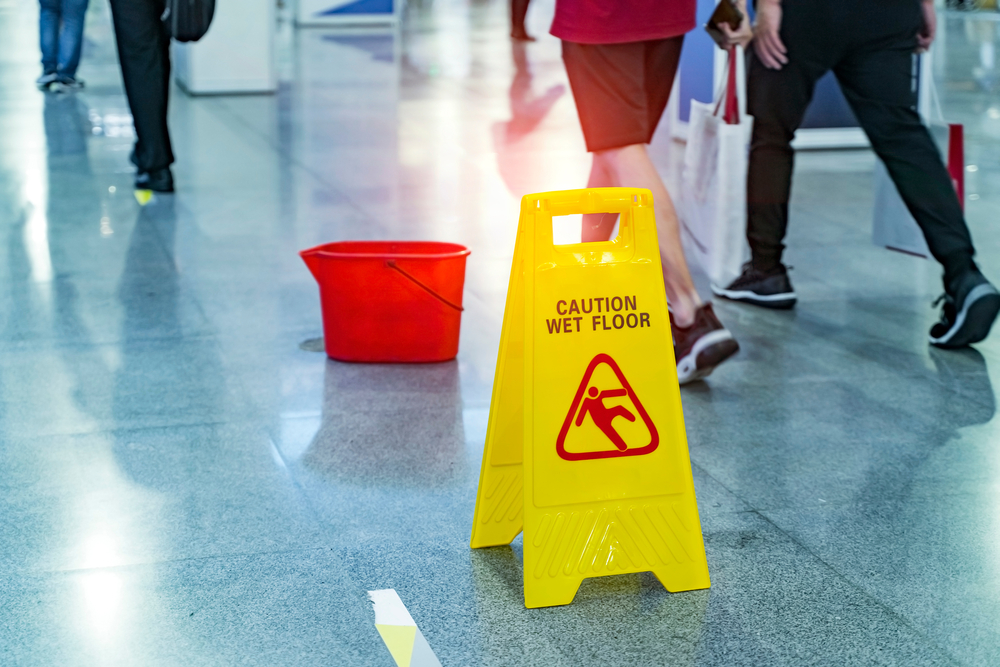
Spilled drinks, dropped food, wet entryways, and freshly mopped floors frequently cause slips. Food courts and self-service areas see the highest risk because customers carry uncovered items through shared walkways. Poor cleanup routines and limited floor monitoring often play a role.
Trip and Fall Incidents
Uneven flooring, torn carpeting, loose floor mats, exposed cords, and cracked tiles lead to trips. Dim lighting or crowded aisles make these hazards harder to spot, especially during peak shopping hours.
Falling Merchandise Injuries
Improperly stacked shelves, unstable displays, and unsecured signage sometimes send items falling onto shoppers. Stores that encourage customers to handle merchandise increase the chance that displays shift or collapse.
Escalator and Elevator Accidents
Mechanical issues, sudden stops, uneven steps, and misaligned doors cause injuries on escalators and elevators. Routine inspections and timely repairs reduce these risks, but lapses still happen in busy malls.
Parking Lot and Garage Accidents
Potholes, poor drainage, oil slicks, and faded lane markings create hazards before shoppers even reach the doors. Pedestrian-vehicle collisions also occur when traffic patterns lack clear signage or lighting.
Each accident type ties back to maintenance choices, inspection schedules, and how mall spaces invite customer interaction.
How Do Connecticut Courts Apply the Mode of Operation Rule?
Connecticut courts apply the mode of operation rule by focusing on how a business chooses to operate, rather than on whether employees noticed a specific hazard. Judges and juries examine everyday practices that make certain dangers predictable, especially in self-service and high-traffic areas, including what you do after a slip and fall.
Key Connecticut Case Law
Connecticut decisions applying the Kelly rule emphasize foreseeability. Courts ask whether the store’s method of selling goods predictably leads to spills or debris on the floor. When the answer points to yes, the injured shopper doesn’t need to show that staff saw the exact hazard before the fall.
Elements That Must Be Proven
Courts generally look for proof showing:
- Self-service business model: Customers handle food, drinks, or merchandise without constant employee control.
- Foreseeable hazard creation: That business method naturally leads to conditions like spills or dropped items.
- Connection to the injury: The fall resulted from the type of hazard the operation makes likely.
Once these elements appear, the burden shifts to the business to show reasonable safety steps.
Foreseeability of the Hazard
Foreseeability depends on common sense and experience. Open drink stations, food trays carried through shared seating, and heavy foot traffic all increase the likelihood of spills. Courts weigh how often those conditions arise and how long they typically last.
Self-Service and High-Traffic Areas
Judges pay close attention to locations where customers serve themselves and crowds move constantly. Food courts, snack kiosks, and sample stations receive extra scrutiny because spills in those areas happen as a natural result of the operation itself.
What Evidence Is Needed in a Mode of Operation Case?
Mode of operation cases succeed or fail based on proof that shows how a business runs day to day, especially in negligence in slip and fall cases. An attorney’s role centers on identifying, preserving, and presenting evidence that ties the injury to foreseeable risks created by self-service operations. Acting early matters because much of this proof disappears quickly.
Surveillance Video Footage
Mall cameras and store security systems often record the area where a fall occurred. An attorney knows how to send preservation requests right away so footage doesn’t get erased or recorded over. Video can show customer traffic patterns, how spills occurred, and how long hazards remained on the floor.
Incident Reports and Witness Statements
After a fall, mall security or store managers usually complete an incident report. An attorney can obtain those records and review them for admissions about conditions, cleanup delays, or prior complaints. Witness statements from other shoppers or employees help confirm what the area looked like before and after the fall.
Store Policies and Procedures
Written policies reveal how a business expects staff to monitor and clean self-service areas. An attorney can request manuals, training materials, and internal guidelines that show whether the business anticipated spills and how it planned to address them. Gaps between policy and practice often support a mode of operation claim.
Maintenance and Inspection Records
Cleaning logs and inspection schedules show how often floors received attention. An attorney reviews these records to compare what the business promised to do with what actually happened on the day of the accident. Missing or inconsistent logs often raise questions about safety routines.
Expert Testimony
Industry professionals sometimes explain how retail practices create predictable risks. Courts use this context to evaluate foreseeability without labeling the attorney as an expert.
Who Can Be Held Liable for a Danbury Fair Mall Accident?
Liability often involves more than one party.
The Mall Owner’s Liability
The mall may bear responsibility for common areas, including food court seating and walkways. Claims may include suing the mall for security negligence if poor monitoring allowed hazards to persist.
Individual Store Liability
Restaurants and kiosks control food preparation and service methods. Their policies often drive spill risks.
Third-Party Contractors
Cleaning crews or maintenance companies may share fault if contracts assign them inspection duties.
Multiple Parties and Joint Liability
Connecticut allows shared fault. Each party answers for its percentage of responsibility.
What Damages Can Be Recovered?
After a fall, losses add up in many ways.
Medical Expenses and Future Care Costs
Emergency care at Danbury Hospital or follow-up treatment through Western Connecticut Medical Group generates bills, which is one reason you need a lawyer after a slip and fall. Claims may seek payment for past care and reasonably expected future treatment.
Lost Wages and Loss of Earning Capacity
Missed workdays reduce income. Long-term limits on work ability affect future earnings.
Pain and Suffering
Connecticut law allows recovery for ongoing discomfort and limitations tied to the injury.
Loss of Enjoyment of Life
Injuries sometimes restrict hobbies, family activities, and daily routines that once brought joy.
What Is Connecticut’s Statute of Limitations for Premises Liability Claims?
Connecticut generally allows two years from the accident date to file suit.
Discovery Rule Exceptions
Rare situations delay the clock when injuries surface later, though courts apply this narrowly.
Impact of Missing the Deadline
Late filings usually lead to dismissal, regardless of the injury’s seriousness.
How The Flood Law Firm Can Help
After a fall at Danbury Fair Mall, quick action and careful preparation make a real difference. Our role focuses on protecting your claim, gathering proof, and holding the right parties accountable under Connecticut law, including the mode of operation rule.
Free Consultation and Early Case Review
We start with a free consultation to hear what happened, review medical treatment, and identify who controlled the area where the fall occurred. That early review helps shape the next steps and prevents delays that often hurt slip and fall claims.
Prompt Investigation and Evidence Preservation
Our team moves quickly to secure surveillance footage, incident reports, and maintenance records before they disappear. We send preservation letters to the mall, individual stores, and contractors so key evidence stays available. Early investigation also helps locate witnesses while memories remain fresh.
Building Mode of Operation Claims
We focus on how self-service layouts, food court practices, and crowd flow create foreseeable spill risks. By gathering store policies, training materials, and cleaning procedures, we show how business methods contributed to the conditions that caused your fall.
Managing Insurance Company Pressure
Insurance carriers often attempt to shift blame or minimize injuries. We handle all communications, respond to information requests, and push back when insurers ignore evidence or delay fair discussions about payment for medical bills, lost income, and other documented losses.
Preparing Every Case for Court
Some cases resolve through negotiation. Others require filing suit when the at-fault party refuses to take responsibility. We prepare each case as if it will go to court, which strengthens your position throughout the process.
Client-Focused Representation from Start to Finish
We stay available to answer questions, explain developments in plain language, and guide you through each stage of the claim, including after a slip and fall can you sue. Our goal centers on clarity, accountability, and steady advocacy while your recovery moves forward.
Frequently Asked Questions About Danbury Slip and Fall Claims
Do I need to prove the mall knew about the hazard that caused my fall?
Under the Kelly rule, proof focuses on whether the business method made spills foreseeable. Specific notice of the exact spill isn’t required.
Can I still recover compensation if I was partially at fault for my accident?
Connecticut follows a comparative fault rule. Courts reduce recovery by the shopper’s percentage of fault, as long as that share stays below 51 percent.
How long does it take to resolve a premises liability case in Connecticut?
Timelines vary. Some cases resolve through negotiation relatively quickly, while others proceed to litigation and take longer.
What should I do immediately after an accident at Danbury Fair Mall?
Seek medical care, report the incident, take photos if possible, and gather witness names. Prompt treatment at facilities like Danbury Hospital also creates records linking injuries to the fall.
Will my case go to trial or settle out of court?
Many cases resolve through negotiated agreements. Trial becomes more likely when insurers or at-fault parties refuse to address documented losses.
Contact Our Slip and Fall Attorneys in Danbury Now
Premises cases move quickly, and evidence fades. Prompt action helps preserve footage, records, and witness accounts. The Flood Law Firm focuses on client advocacy and accountability for unsafe retail practices.
Reach out for a free consultation to discuss your situation and learn how a local team can help pursue compensation for medical costs, lost income, and other documented losses.